Its all about food and cooking, with or without meat, local or not; what matters most is the result and wasting as little as possible, regardless of the budget. Use what you've got as best as you can, whether you've got all day to cook, or only five minutes.
Thursday, April 28, 2011
Kitchen basics: vegetables aren't all braindead
The current line of thinking in activist circles is that we eat too much meat and not enough vegetable, or at the very least, not enough plant matter. To which I can certainly agree; look at your average plate at most restaurant, and you'll see a large amount of what's on it taken over by two groups: meat and starch. This certainly affects our perception of what we eat at home, as we tend to focus a lot of the food items around a large piece of meat (and accompanying fat), which dings the grocery budget by quite a bit, and a large helping of rice/potato/pasta/bread or combo thereof.
For a restaurant, there is a simple logic to this: people love their meat, so that's the star of the plate and what draws the customers in, and starches and cheap and filling, making sure that the customer feels full; the vegetables on the other hand, tend to be mostly used as decoration (like that piece of tomato on the classic diner breakfast) or as a flavor bit, just to give the illusion that we are eating some veggies. That bit of salad on the plate is alright, but not particularly nutritious. That's why many salad offerings in most restaurants have cheese, croutons or bits of meat added in, to convince our programmed minds that we have a "real meal."
Truth is, there's not a lot of plants on the offering because of the costs: most vegetables have to be fresh, so they must be bought and used withing a few days of purchase, and most people are drawn in by the meat, which also dings the budget... you get where this is going.
So, what vegetables should be part of the kitchen staples then? To keep with the running heme, the ones that will be the most adaptable, and will provide the most bang for your buck by keeping well and making you want to eat them while they are fresh. And will make you want to save them if they start to go on the blink.
Tomatoes:
while technically they are classified as fruits, tomatoes are most often used in savory preparations. One thing that makes them so awesome is the variety of ways in which they can be used, sometimes in the same dish. For example, in a pasta sauce you could well use a can of diced tomatoes, some coulis and some tomato pasta, all bringing different actions to the dish. Pretty much any methods of preservation will be worth picking up, but my recommendation is to have a can or two of either whole or diced tomatoes, a tube of tomato paste (like toothpaste, it allows for only using a small amount at a time) and some sun dried, in oil or not, your choice. If you get them in oil, check the differences between brands, as they are not equal. Sometimes paying a dollar more will really pay off in the quality of the product.
Making a habit of getting fresh tomatoes when possible gives you a few more choices of preparations; this is where the variety of fruits becomes important. There is quite a bit of difference between Roma, beefsteak and simple vine-grown, and they are not all used for the same purpose, as they all have different characteristics. Roma are going to be firmer and fleshier, mostly used for sauces and for cooking; beefsteak are going to be large, lumpy and flavorful, perfect for sandwiches and to complement burgers; vine-grown would most likely be used for salads, but they can well be used instead of other varieties. These are but examples, so just be aware that there are several varieties and go from there.
String beans:
an easy way to add veggies to your plate, steamed beans, whether yellow of green, are as great fresh and or frozen. This is one of those items that you can pick up a large bags and keep in your freezer, to be used whenever you need that extra hit and forgot (or couldn't afford) the fresh stuff.
Corn and peas:
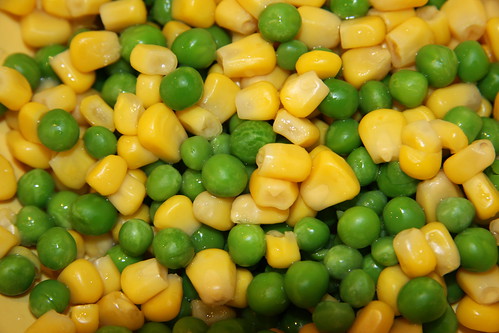
I toss those two together, as they can easily be picked up in large bags in the frozen section and kept around to be steamed and added to the plate, as they can be tossed into other preparations, like soups or stews. Don't buy canned peas, its not worth it, but if you make shepherd's pie, then you may want to have a can of creamed corn and add a few handfuls of kernels, as a a good binder between the meat and mash.
Spinach:
if there's a green guy you should always have hand, then spinach is your man.When fresh they could be turned into a salad, or stems removed, sauteed with a bit of olive oil and pinch of salt for some great side dish; frozen have the added advantage of being pre-stemmed, come in a variety of formats (whole, shredded loose, shredded and lumped into balls) and are ready to be added to a variety of preparations. Soups, pilaf, risotto, stews, pizza, pasta, the list is long and they certainly are delicious and healthy for you. Just don't believe the common notion that they are packed with iron, that stems from a century old misprint...
Bell peppers:
when in season, they are a great friend to have around; they can be used raw or cooked, served as crudites, sliced on pizza, sliced and sauteed, stuffed and stewed, roasted... they serve as a basis for both Cajun and Spanish cooking, and they are also common in Eastern European cuisine, so there is certainly some room to play with variety here.
Zucchini:
also known in more refined (and Frenchified) circles as courgette, this is a soft member of the squash family, having the distinct advantage of not requiring peeling. While you can certainly eat them raw as part of a salad, you would most likely enjoy them sauteed, in soups, in pasta sauce, roasted... you get the idea. Don't pick them too small or too big, the optimal size is pretty much a small cucumber.
Roots:
if you've done some stocking of your pantry, then you should definitely have some of those around; onions, carrots, potatoes, garlic, rutabagas, those can all come into play, especially when combined with some of their fridge friends. It can be pretty amazing what a simple trio of these guys can do when they gang up in your pot!
Fruits:
I'll be honest and admit that I dont use fruits a lot, especially in winter. These are generally the guys that you'll want in season, when they're not ridiculously expensive, and as local as possible, so that you get the stuff that got to ripen in the field instead of a transport truck from three countries away.
In the event that you should keep stuff around, then frozen is a good option. They are more likely to have been picked when ripe, and if you can swing it, look for those brands who are flash frozen (withing a couple of hours from harvesting.) Otherwise, lemons and lime can always come in handy, even if its just to give and extra kick to your bar.
Of those that are available most of the year, bananas are a good go-to, especially for the breakfast smoothies, or those of you that can handle some baking. Along with apples like Cortland, they make handy snacks. Try to stay away from such varieties like Macintosh, Red or Yellow Delicious and the like, as they don't have good shelf live and don't hand the qualities that you want if you want something that can be cooked as well as eaten as is.
Did I miss something? Feel free to comment and add your suggestions. Remember, its your plate, its your fridge, so eat it, don't waste it.
Monday, April 18, 2011
Kitchen basics: proteins part 2, the vegetarian option
As an omnivore, not using meat for a main meal is a little odd. After all, according to the food charts that the government puts out, it is part of the food groups that we should balance throughout our day. While it means rethinking what's been assumed is necessary for a square meal, it is quite possible, some would argue healthier, to not eat meat and still have a balanced diet.
I'm not going to go down the road of preaching this or that diet; what I am going to offer is meat substitutions that maintain the body's need for proteins and other elements that are packed in animal proteins. The one thing that has to be taken into account when going on a vegetarian diet is that you'll need to learn your essentials and get your substitutions right, or you'll run out of essential vitamins. So if that's your game, then sit down and do some studying. For the rest, taking a few meals a week as vegetarian as possible will be quite healthy and a nice change of pace. You do need a few lean days once in a while.
First off, the animal products:
-Fish and seafood:
I treat those under the same heading, because they pose the same problem: the best stuff is fresh, but that doesn't allow for good budgeting. There is also the issue of commercial fisheries and all that stuff, but again, this is more of an issue of conscience than of good budgeting. It is quite possible to include them in your diet without busting the bank, but you'll have to learn new techniques for dealing with them; one great advantage is that they are pretty fast cookers, so if you tend to live a hectic life, then these guys are your friends, besides the health benefits.
Only go for fresh seafood if its really a deal, except for mussels; a pack of fresh mussels costs about five dollars and can feed two to four people in one sitting. Seafood is fairly forgiving of the frozen state, so if you were to get some staples there, I'd recommend shrimps to begin with; its amazing what a handful of shrimps tossed unto a bowl of Ramen can do! Its a great way to add a different flavor on a whim, and always useful to have around for the vegetarians. You can also go with clams (shelled or not), calamari or scallops. If you have access to Asian shops its very likely that they'll have a nice variety of frozen seafood available at a reasonable price, in a variety of size.
Fish should be picked up as fresh as possible, but there are decent frozen options, depending on your tastes. White fish will tend to be pretty plain tasting, so a bit of flavoring will make a huge difference. Cod is one of the best white fish to pick up, but its not the cheapest and over harvesting is certainly an issue. Of the pink flesh types, the most common would be salmon, but its not for every one's tastes. I'm more of a trout man myself, but go with what makes you comfortable. There are several brands of commercially available frozen fish products that are portioned and individually packaged, which is a boon for the thrifty eater, but a bit of a bitch for those who are more environmentally concerned. You could buy it fresh and pack it is such a way as to save on plastic, but I'll leave that up to your judgement.
-Cheese:
cheese is sort of the neglected child in our pantries. People see the price per pound and consider it expensive, but then they'll gladly splurge on a couple of steaks. Do the math: how many meals can you dish out with a couple of t-bones? Now take the same cost and buy some cheese; how much variety do you get?
The problem is that too many of us were brought with very bad cheese, and so the relationship was skewered from the start. Avoid that terrible word "processed" and get some good multipurpose cheese, like cheddar, Emmental, Havarti, Gouda or Gruyere. If you like cheese that melt easily then get mozzarella, but spike it by grating it with another friend, its give the result a better flavor. On a later post, I'll come back to cheese on more details. In the meantime, pick something that you can cook with, and that you can eat as is. Never buy them horrid individually wrapped cheese slices and cheese spreads; its really not worth the money, seriously.
-Eggs:
you should definitely have some eggs in your fridge at all time. For many cultures in Europe, an easy snack involves a fried egg, and having a jar of good homemade pickled eggs in the fridge does wonders to feed the midnight (or midday) munchies. When you've learned how to use them properly, a dozen eggs can get you through several meals at a very low cost indeed.
-Yogurt:
the granddaddy of fermented dairy, yogurt has a few advantages that are worth noting: it is a digestive booster, helping the intestinal flora rebuilt itself (preventing... clogging.); it is an essential component in curries and tsaziki; it is a valid base for less oily salad dressing; it can be used sweet or savory, so its pretty flexible. With a handful of nuts and berries, its an instant breakfast. Toss the fruits in a blender with some yogurt, a spoonful of honey and some bran, and its smoothie galore.
Skipping animal derivate, what are the options?
-Beans and legumes:
there is a vast selection of hearty dishes that can be developed out of these guys from Italy, Spain, Greece, the south of France, the near and middle East, eastern Europe and the Indian subcontinent. That's a huge array of flavors and possibilities, so there's no reason not to keep a few cans of those little guys around. Lentils are a great choice, as out of all the legumes, they can be prepared from dry with no soaking required and are common in nearly all of those cuisines. And they sure are cheap!
-Nuts and peanuts:
while technically peanuts are legumes, we pretty much use them the say ways we use nuts, so we'll treat them together. They are packed with good fats, but should be used moderately; a portion of nuts is a pretty small handful in actuality. Unless you're really going to burn it off, stray on the side of less rather than too much and you'll stay clean of the extra padding.
Personally I find that peanuts are the most multi-use of the dried legumes, usable as butter, whole or crushed, as finger foods, preparation additives, spreads and as a delicious toppings for ice cream, pho, curries and salads. Crushed nuts can also be used in nearly the same way, but will end up costing you more. I always have a jar of peanut butter in the pantry, and keep a small bag of good roasted peanuts for quick snacks.
-Mushrooms:
again, we have to blame modern dietary habits for our perception of mushrooms. For one thing, we all tend to buy good old white button mushrooms, and that's well and fine, but they are fairly boring. The other thing is that until recently, those were the mushrooms available pretty much everywhere, so that was all you go, unless you got adventurous and splurged on some coffee caps, or for the sophisticated, portobellos.
But mushroom production, helped by a combo of Chinese buyers and celebrity chefs, have been growing more varieties, such as shitake, oister and porcini. Mushrooms can nearly serve as a meat replacement, as they are pretty nutritious and the variety provides a wide array of flavors and texture. If you have access to an Asian market, then you should look into getting some dried mushrooms, which keep a long time, only requiring soaking prior to use. If you have a good and reliable supplier, you could also get your hands on wild picked fungi, and delicious things like Horn of Plenty and Hen of the Wood could start turning up on your dinner plate.
My recommendation for mushrooms is to get some good old white button fresh, but keep an eye out for some dried shitake and others, which can not only supplement your fare, but when mixed up can really change your otherwise plain omelet. The other great thing about mushrooms is that they are a low-impact food source, requiring delicate conditions to grow, but little other resources like water and definitely no chemical fertilizer: it is entirely fed by manure.
-Grains and plant-based products: on this one I'm going on a limb of sort, as its really not my area of expertise (blame bacon if you like), but there are several products of plant based protein sources that can really help you out if meat and animal products are out of the question.
Quinoa
is a good source to investigate, as it bypasses two major allergenic concerns, soy and gluten intolerance. I am of the first order (in my case I simply do not process it effectively) and gluten concerns is a rising trend, so this could be an interesting source to investigate.
Soy
in the form of tofu, miso or tempeh are also sources of healthy proteins, but there you're on your own. I have never had good experiences with tofu, so its not one of my go-to recommendations for meat replacement, but I would encourage you to experiment with miso and tempeh, which are fermented (naturally, not industrially processed) soy paste products with great health benefits. In this I would recommend a bit of investigation with places like this site.
Overall, meat replacement is a question of choice, more than a budgetary reason. Some could argue that its healthier, some would say cheaper, but I'd say that its mostly a choice that requires an open mind and a certain amount of research to be certain that you don't end up with vitamin or mineral deficiencies.
In all, a good diet is a question not only of nutrition balance, but also of variety. This takes place both on the source of the building blocks of your meals, but in the healthy attitude of an open-mind and curiosity for new culinary approach, combined with a stomach that dares to try something new.
You could well be pleasantly surprised and discover a new comfort food. Even if its from the other side of the planet.
I'm not going to go down the road of preaching this or that diet; what I am going to offer is meat substitutions that maintain the body's need for proteins and other elements that are packed in animal proteins. The one thing that has to be taken into account when going on a vegetarian diet is that you'll need to learn your essentials and get your substitutions right, or you'll run out of essential vitamins. So if that's your game, then sit down and do some studying. For the rest, taking a few meals a week as vegetarian as possible will be quite healthy and a nice change of pace. You do need a few lean days once in a while.
First off, the animal products:
-Fish and seafood:
I treat those under the same heading, because they pose the same problem: the best stuff is fresh, but that doesn't allow for good budgeting. There is also the issue of commercial fisheries and all that stuff, but again, this is more of an issue of conscience than of good budgeting. It is quite possible to include them in your diet without busting the bank, but you'll have to learn new techniques for dealing with them; one great advantage is that they are pretty fast cookers, so if you tend to live a hectic life, then these guys are your friends, besides the health benefits.
Only go for fresh seafood if its really a deal, except for mussels; a pack of fresh mussels costs about five dollars and can feed two to four people in one sitting. Seafood is fairly forgiving of the frozen state, so if you were to get some staples there, I'd recommend shrimps to begin with; its amazing what a handful of shrimps tossed unto a bowl of Ramen can do! Its a great way to add a different flavor on a whim, and always useful to have around for the vegetarians. You can also go with clams (shelled or not), calamari or scallops. If you have access to Asian shops its very likely that they'll have a nice variety of frozen seafood available at a reasonable price, in a variety of size.
Fish should be picked up as fresh as possible, but there are decent frozen options, depending on your tastes. White fish will tend to be pretty plain tasting, so a bit of flavoring will make a huge difference. Cod is one of the best white fish to pick up, but its not the cheapest and over harvesting is certainly an issue. Of the pink flesh types, the most common would be salmon, but its not for every one's tastes. I'm more of a trout man myself, but go with what makes you comfortable. There are several brands of commercially available frozen fish products that are portioned and individually packaged, which is a boon for the thrifty eater, but a bit of a bitch for those who are more environmentally concerned. You could buy it fresh and pack it is such a way as to save on plastic, but I'll leave that up to your judgement.
-Cheese:
cheese is sort of the neglected child in our pantries. People see the price per pound and consider it expensive, but then they'll gladly splurge on a couple of steaks. Do the math: how many meals can you dish out with a couple of t-bones? Now take the same cost and buy some cheese; how much variety do you get?
The problem is that too many of us were brought with very bad cheese, and so the relationship was skewered from the start. Avoid that terrible word "processed" and get some good multipurpose cheese, like cheddar, Emmental, Havarti, Gouda or Gruyere. If you like cheese that melt easily then get mozzarella, but spike it by grating it with another friend, its give the result a better flavor. On a later post, I'll come back to cheese on more details. In the meantime, pick something that you can cook with, and that you can eat as is. Never buy them horrid individually wrapped cheese slices and cheese spreads; its really not worth the money, seriously.
-Eggs:
you should definitely have some eggs in your fridge at all time. For many cultures in Europe, an easy snack involves a fried egg, and having a jar of good homemade pickled eggs in the fridge does wonders to feed the midnight (or midday) munchies. When you've learned how to use them properly, a dozen eggs can get you through several meals at a very low cost indeed.
-Yogurt:
the granddaddy of fermented dairy, yogurt has a few advantages that are worth noting: it is a digestive booster, helping the intestinal flora rebuilt itself (preventing... clogging.); it is an essential component in curries and tsaziki; it is a valid base for less oily salad dressing; it can be used sweet or savory, so its pretty flexible. With a handful of nuts and berries, its an instant breakfast. Toss the fruits in a blender with some yogurt, a spoonful of honey and some bran, and its smoothie galore.
Skipping animal derivate, what are the options?
-Beans and legumes:
there is a vast selection of hearty dishes that can be developed out of these guys from Italy, Spain, Greece, the south of France, the near and middle East, eastern Europe and the Indian subcontinent. That's a huge array of flavors and possibilities, so there's no reason not to keep a few cans of those little guys around. Lentils are a great choice, as out of all the legumes, they can be prepared from dry with no soaking required and are common in nearly all of those cuisines. And they sure are cheap!
-Nuts and peanuts:
while technically peanuts are legumes, we pretty much use them the say ways we use nuts, so we'll treat them together. They are packed with good fats, but should be used moderately; a portion of nuts is a pretty small handful in actuality. Unless you're really going to burn it off, stray on the side of less rather than too much and you'll stay clean of the extra padding.
Personally I find that peanuts are the most multi-use of the dried legumes, usable as butter, whole or crushed, as finger foods, preparation additives, spreads and as a delicious toppings for ice cream, pho, curries and salads. Crushed nuts can also be used in nearly the same way, but will end up costing you more. I always have a jar of peanut butter in the pantry, and keep a small bag of good roasted peanuts for quick snacks.
-Mushrooms:
again, we have to blame modern dietary habits for our perception of mushrooms. For one thing, we all tend to buy good old white button mushrooms, and that's well and fine, but they are fairly boring. The other thing is that until recently, those were the mushrooms available pretty much everywhere, so that was all you go, unless you got adventurous and splurged on some coffee caps, or for the sophisticated, portobellos.
But mushroom production, helped by a combo of Chinese buyers and celebrity chefs, have been growing more varieties, such as shitake, oister and porcini. Mushrooms can nearly serve as a meat replacement, as they are pretty nutritious and the variety provides a wide array of flavors and texture. If you have access to an Asian market, then you should look into getting some dried mushrooms, which keep a long time, only requiring soaking prior to use. If you have a good and reliable supplier, you could also get your hands on wild picked fungi, and delicious things like Horn of Plenty and Hen of the Wood could start turning up on your dinner plate.
My recommendation for mushrooms is to get some good old white button fresh, but keep an eye out for some dried shitake and others, which can not only supplement your fare, but when mixed up can really change your otherwise plain omelet. The other great thing about mushrooms is that they are a low-impact food source, requiring delicate conditions to grow, but little other resources like water and definitely no chemical fertilizer: it is entirely fed by manure.
-Grains and plant-based products: on this one I'm going on a limb of sort, as its really not my area of expertise (blame bacon if you like), but there are several products of plant based protein sources that can really help you out if meat and animal products are out of the question.
Quinoa
is a good source to investigate, as it bypasses two major allergenic concerns, soy and gluten intolerance. I am of the first order (in my case I simply do not process it effectively) and gluten concerns is a rising trend, so this could be an interesting source to investigate.
Soy
in the form of tofu, miso or tempeh are also sources of healthy proteins, but there you're on your own. I have never had good experiences with tofu, so its not one of my go-to recommendations for meat replacement, but I would encourage you to experiment with miso and tempeh, which are fermented (naturally, not industrially processed) soy paste products with great health benefits. In this I would recommend a bit of investigation with places like this site.
Overall, meat replacement is a question of choice, more than a budgetary reason. Some could argue that its healthier, some would say cheaper, but I'd say that its mostly a choice that requires an open mind and a certain amount of research to be certain that you don't end up with vitamin or mineral deficiencies.
In all, a good diet is a question not only of nutrition balance, but also of variety. This takes place both on the source of the building blocks of your meals, but in the healthy attitude of an open-mind and curiosity for new culinary approach, combined with a stomach that dares to try something new.
You could well be pleasantly surprised and discover a new comfort food. Even if its from the other side of the planet.
Sunday, April 10, 2011
Food porn, April edition
Okay, so I have not been posting on as regular a basis as I'd have wanted, so here's some food porn for you, yeah?
| Homemade subs: fried mushrooms and onions, bavette and melted cheese. |
| Frittata: mushrooms, bacon, onions, tomato and cheese, finished under the broiler. |
| The kind of takeout wonders I can pick up in Chinatown: roasted Peking duck, fried spring rolls and a ton of rice. Enough o stuff two people and all that for seven bucks! |
Tuesday, March 29, 2011
When you are Hungary
Since I changed apartments and neighborhoods, my diet has changed as well. This reflects the fact that my local resources have changed, giving me access to different products. When I changed employment a few months later, I had to pay closer attention to what was in my immediate area and forced me to explore and exploit those local resources.
I have a pretty wide culinary palate. I don't restrict myself to my cultural base and try out ethnic products and dishes, which are themselves comfort foods of those people. One ethnic group in my new stomping grounds are Eastern Europeans: Russians, Poles, Romanians, Hungarians and Jews. They bring a whole new dimension to tastes and preparation, and are a great source for delicious delicatessen. Its a nice change from the Italian/French/German fare I was used to up to now.
Of the delicious preparations I have since adopted and adapted to my repertoire, goulash and sauerkraut make a regular tour of duty on my dinning table; they are simple to make and use those types of spices that you may have lying around and have never quite figured out what to do with, until now.
First off, goulash. Goulash is a traditional Hungarian dish, mostly served as a soup (according to wikipedia, that is) and occasionally as a stew. For now, we're going to do the simple, and more flexible thing and make it a stew.
There are three basic elements to a goulash: meat, onions and paprika. Overall, its a simple dish, simple to make and inexpensive. How inexpensive? I can make a large goulash out of a small pork shoulder (about two and a half pound) for about seven dollars. And that's a lot of meat servings.
Serve with potatoes, perogies, egg noodles, boiled veggies, whatever you have on hand. You can cut the middleman by cooking your veggies at the same time as the meat, tossing in carrots, potatoes, parsnips, rutabagas, and for a bit of variety, peas.
As a variation, you could cut your pieces of meat smaller, add in your veggies cut in about the same size and enough cooking liquid to more than cover; simmer at low heat and you've got yourself a nice hearty soup, perfect for those nasty winter months where shoveling snow and dragging fire wood in an everyday thing.
And then, we have sauerkraut. Properly, sauerkraut is fermented cabbage, which probably sound scary and disgusting, but is actually very delicious and is one of those wonderfoods. Proper 'kraut is soft and not soaked in vinegar, so unless you are lucky, it isn't found in jars or cans. If you get your sausage at a proper ethnic deli, then most likely they also offer homemade sauerkraut, a totally different beast.
Those of you who have a world palate and have tried Korean foods may be familiar with kimchi; its actually the Korean cousin of sauerkraut.
So, lets look at making something good even better, shall we?
Serve with mash potatoes and/or perogies, with a spoonful of sour cream for the mash or dumplings. If you skip the meat part in the 'kraut, you can well serve the sausages boiled or grilled with some simple yellow mustard, or some boiled ham. Alternatively, you could simply serve it with some good fresh bread, or use the 'kraut as a sandwich filled: take a sub roll, open it and grill it crunchy, stuff with the sauerkraut with a bit of mustard to taste.
Delicious stuff.
I have a pretty wide culinary palate. I don't restrict myself to my cultural base and try out ethnic products and dishes, which are themselves comfort foods of those people. One ethnic group in my new stomping grounds are Eastern Europeans: Russians, Poles, Romanians, Hungarians and Jews. They bring a whole new dimension to tastes and preparation, and are a great source for delicious delicatessen. Its a nice change from the Italian/French/German fare I was used to up to now.
Of the delicious preparations I have since adopted and adapted to my repertoire, goulash and sauerkraut make a regular tour of duty on my dinning table; they are simple to make and use those types of spices that you may have lying around and have never quite figured out what to do with, until now.
First off, goulash. Goulash is a traditional Hungarian dish, mostly served as a soup (according to wikipedia, that is) and occasionally as a stew. For now, we're going to do the simple, and more flexible thing and make it a stew.
There are three basic elements to a goulash: meat, onions and paprika. Overall, its a simple dish, simple to make and inexpensive. How inexpensive? I can make a large goulash out of a small pork shoulder (about two and a half pound) for about seven dollars. And that's a lot of meat servings.
So first, you need some meat; how much meat and what kind entirely depends on your tastes, dietary requirements and supplies. Traditionally it made with beef or veal, but after trying out the beef, I don't like the taste or texture, so I'm more for pork or lamb, but if you have it on hand, you could do it with chicken, or for the vegetarians, potato and beans. Go for meat that is fairly fat and requires some cooking; my go-to choices are pork shoulder (at about thirty percent fat, this is what is used to make sausage) and lamb or goat cubes, on the bone. Generally those will be of the tougher, longer cooking variety, less popular, and thus cheaper, which is a win-win situation, as they are better tasting. Depending on your supplies, have them at about an inch to an inch-and-a-half cubes, but mostly try to keep it of a fairly consistent size.
You'll need some onions; for this you can very well use your traditional yellow onions, as they are very cheap and easily available. You'll want a good amount, at least two baseball-sized, split in two and sliced, but you can use as much as you want, say as much as you have meat, which could be a good way to stretch it.
Now that you've got your two leads, you need the supporting cast: some cooking fat, enough to slowly soften up the onions while leaving some to build your sauce. The character actor of this play is the paprika. Get some good paprika, preferably Hungarian, but use what you've got on hand. You could well add nothing more than salt and pepper to the mix and it'd be fine (and very traditional), but I like to build a mix myself, by adding on ground cumin and turmeric, also known as cucurma. Its not traditional, but cucurma is a great flavor enhancer, necessary for mixing up some curry, and is one of those natural health booster that's so handy to eat. I would also recommend adding some garlic, sliced or crushed, to the onion. The last item is some cooking liquid, whether its stock, beer, wine or just good old water. Not too much, just enough to nearly cover the cooking mixture.
First, you warm up the cooking fat; this is a good time to use the trimmings from your meat, or leftover bits of bacon or ham. Toss in the onions and cook over moderate heat until they soften and become translucent; there should be some fat left in the cooking vessel to build your sauce on. If you add garlic to the mix you'll want to add it to the onions a couple of minutes before the onions get to the right spot.
Take the pot off the heat and add in your spice mix; you should have a couple of table spoonfuls. Stir it in the fat and onion mix until well spread out and add in the meat. Stir to cover throughout and return to the heat. Keep stirring the mixture to make sure that the flavors get well spread out throughout the whole preparation and add the cooking liquid. Bring to a boil then reduce the heat to simmer and cover. Cook until the liquid is mostly gone, leaving a fairly thick sauce.
Serve with potatoes, perogies, egg noodles, boiled veggies, whatever you have on hand. You can cut the middleman by cooking your veggies at the same time as the meat, tossing in carrots, potatoes, parsnips, rutabagas, and for a bit of variety, peas.
As a variation, you could cut your pieces of meat smaller, add in your veggies cut in about the same size and enough cooking liquid to more than cover; simmer at low heat and you've got yourself a nice hearty soup, perfect for those nasty winter months where shoveling snow and dragging fire wood in an everyday thing.
And then, we have sauerkraut. Properly, sauerkraut is fermented cabbage, which probably sound scary and disgusting, but is actually very delicious and is one of those wonderfoods. Proper 'kraut is soft and not soaked in vinegar, so unless you are lucky, it isn't found in jars or cans. If you get your sausage at a proper ethnic deli, then most likely they also offer homemade sauerkraut, a totally different beast.
Those of you who have a world palate and have tried Korean foods may be familiar with kimchi; its actually the Korean cousin of sauerkraut.
So, lets look at making something good even better, shall we?
First, you'll need some 'kraut. Two to three cups is a good place to start. You'll also need an onion, halved and sliced, as much garlic as you love (the more the merrier, I say), a chunk of good cured pork belly or good Eastern European sausage (bratwurst, frankfurter and knockwurst are good choices), some spices and some beer. Sure, you could do without the beer, but it really makes it better.
What kind of spices do you need? A pinch of salt, some black pepper, cumin, mustard powder or seeds, and a bay leaf or two all combine to make an excellent brew. If you use seeds you'll want to roast them briefly in a dry pan before adding in anything else. It helps release the flavors (and prepares you for preparing Indian spice mixes.)
So first, heat up some cooking fat and soften up the onions. Add in the meat cut in mite-sized chunks and brown, allowing the flavors to develop and the fats to be released. When the browning action is well on its way, add the spices, except for the bay leaf. Stir a few seconds and add the sauerkraut. Stir to mix well, add the cooking liquid and the bay leaf. You don't need a lot of liquid, just enough to wet the mix; you have to pour just enough to keep it moist, so as soon as you can see the liquid, its enough. Bring to a boil and lower the heat to simmer, covered, until most of the liquid is gone.
Serve with mash potatoes and/or perogies, with a spoonful of sour cream for the mash or dumplings. If you skip the meat part in the 'kraut, you can well serve the sausages boiled or grilled with some simple yellow mustard, or some boiled ham. Alternatively, you could simply serve it with some good fresh bread, or use the 'kraut as a sandwich filled: take a sub roll, open it and grill it crunchy, stuff with the sauerkraut with a bit of mustard to taste.
Delicious stuff.
Wednesday, March 23, 2011
Kitchen basics: proteins part 1, one man's meat
If there is one thing that makes your grocery budget puff up, its your protein count. Meat and dairy are somewhat high-price items on which we devote a large chunk of our budget. You can certainly do without, but its not a budget issue, its one of lifestyle choices, and yes, in some cases actual dietary necessity.
So under the heading of proteins, I will deal with the sorts of meat, meat replacements and dairy products that should be in your stocks, so that not only you are fed, but you have enough variety to stave off boredom, all the while keeping with the budget.
So first off, animal flesh.
Keep in mind that the more work a butcher has put into the carcass, the higher the price tag, influenced with the market's offer-and-demand philter. If you want to maximize your budget, accept that having to deal with bones might well be on the table; you'll also have to deal with fattier cuts, because trimming costs more money. Now bones and fat are not waste, far from it. Bones enhance the flavor of stock and sauce, and fat is concentrated nutrition and makes meat more tender. Get yourself some knife skills and you can do the trimming job yourself, re-purposing the trimmings for your own benefit. Tougher cuts also become a factor, but that means learning slow-cooking methods and far more flavorful cuts. Seriously, tenderloin is boring as all hell.
So, by beast, the cuts:
-Chicken:
buy it whole, and look at the type; a frying chicken is not the same as roasting and mature is yet a different bird. A good roasting chicken is always handy, prepared whole, or taken apart at home with a modicum of knife skills. Its a rare thing that individual cuts will be worthwhile, but a family or economy pack of thighs or drumstick can be very handy when you want to prepare a specific dish. A mature chicken (or hen) or two in the freezer are always useful, and very cheap; a bird will cost you a couple of dollars, make flavorful stock and tend to have a larger meat-to-bone ratio than roasting birds, but they require long slow simmering coking time.
-Beef:
I buy little beef myself, I find it generally uninspiring. You'll want to stay away from steaks, and they are in high demand, and the price goes accordingly. Blade roasts (on the bone) are cheap and flavorful, and can be cut in pieces if you want stewing beef. I buy oxtail, because I can source it pretty cheap, but you sort of have to know what to do with it, so its not for everybody. Another good source of cheap, flavorful beef is shank, usually cut into slices, again requiring slow-cooking methods. Its a meatier, heartier osso bucco.
-Lamb and goat:
When I go for red meat, this is what I usually head for. Lamb shank is a favorite piece of mine, and the shoulder makes beautiful stew meat. If you are going for individual cuts, look for grilling pieces instead of the chops; they may not be as neat and sexy, but you'll more than make up for it in the flavor and tenderness. The last piece I'd recommend is the neck, commonly used for stews and many variations of middle-eastern dishes. The same cuts apply equally to goat, which is leaner, and little more flavorful, but harder to find. Try to get the local stuff instead of the New-Zealand imports; they may be somewhat more expensive, but they more than make up for it by having a more tender and meatier output.
-Pork:
If you do not have dietary requirements preventing it, pork is your best friend. Its an incredibly versatile beast that takes well for spices, fast and slow cooking and multiple methods of preservation. My go-to cuts are the shoulder and the belly, from which craftsmen derive sausage and bacon. If you get those parts fresh, you have delicious meat oozing with unctuous fats that will leave you satisfied. You can also grab shanks, in slices for stews and confits, or whole, fresh or smoked for pea soup. There's very little of the pork that goes to waste; even the intestines are reused as casings for sausages.
-Cured meats:
I would recommend that you make sausages a part of your diet. Any sort of flesh can be made into sausage, from ostrich to salmon and of course pork. The only meat that is actually rare to find in sausage form is beef. And when I say sausage, I don't mean hotdog weiners, I mean sausages. If you have access to them, head to your local ethnic deli and butcher shop. Their products are more likely made on site and of far better quality than the factory-made grocery store stuff. Most of them are made out of pork, but if you like some spice into your life and shun the piggie, merguez are your friend, available in lamb and chicken at any hallal butcher shop.
Having some dried cured sausages around is always a good idea, since that they are versatile and have a longer shelf life than fresh sausages. Of my favorites I would got for Spanish chorizo and Romanian kabanos. They can be eaten as-is, or cubed and added to bean dishes for flavor and meat content. Buying bacon in chunks rather than slices is also a good idea, as it leaves you with a greater range of use than the traditional sliced kinds. If there is a deli shop in your area, look or ask for the butt-ends of cured hams, like prosciutto. They may well have those pieces on sale as a chunk, as they become too difficult to put on the slicer and they want to maximize their revenue. Treat like bacon slabs as for their use in cooking.
I would certainly suggest that you mix and match, vary your stocks and keep it flexible, but my rough list of things that should be in supply are a boiling chicken, some lamb or pork shoulder, a pair of chorizo, a slab of smoked bacon and a selection of good sausages. Once that you know how to handle them, its pretty amazing the variety of dishes you can come up with that variety, and I haven't even dealt with dairy and other options yet...
So under the heading of proteins, I will deal with the sorts of meat, meat replacements and dairy products that should be in your stocks, so that not only you are fed, but you have enough variety to stave off boredom, all the while keeping with the budget.
So first off, animal flesh.
Keep in mind that the more work a butcher has put into the carcass, the higher the price tag, influenced with the market's offer-and-demand philter. If you want to maximize your budget, accept that having to deal with bones might well be on the table; you'll also have to deal with fattier cuts, because trimming costs more money. Now bones and fat are not waste, far from it. Bones enhance the flavor of stock and sauce, and fat is concentrated nutrition and makes meat more tender. Get yourself some knife skills and you can do the trimming job yourself, re-purposing the trimmings for your own benefit. Tougher cuts also become a factor, but that means learning slow-cooking methods and far more flavorful cuts. Seriously, tenderloin is boring as all hell.
So, by beast, the cuts:
-Chicken:
![]() |
| Here's looking at you, kid. |
-Beef:
![]() |
| Can you find Waldo? |
-Lamb and goat:
![]() |
| They forgot to tell you how delicious Lamb Chop was. |
-Pork:
![]() |
| You know, the other white meat. |
-Cured meats:
![]() |
| They see them hanging, they be hating. |
Having some dried cured sausages around is always a good idea, since that they are versatile and have a longer shelf life than fresh sausages. Of my favorites I would got for Spanish chorizo and Romanian kabanos. They can be eaten as-is, or cubed and added to bean dishes for flavor and meat content. Buying bacon in chunks rather than slices is also a good idea, as it leaves you with a greater range of use than the traditional sliced kinds. If there is a deli shop in your area, look or ask for the butt-ends of cured hams, like prosciutto. They may well have those pieces on sale as a chunk, as they become too difficult to put on the slicer and they want to maximize their revenue. Treat like bacon slabs as for their use in cooking.
I would certainly suggest that you mix and match, vary your stocks and keep it flexible, but my rough list of things that should be in supply are a boiling chicken, some lamb or pork shoulder, a pair of chorizo, a slab of smoked bacon and a selection of good sausages. Once that you know how to handle them, its pretty amazing the variety of dishes you can come up with that variety, and I haven't even dealt with dairy and other options yet...
Saturday, March 12, 2011
Not like your mom used to make
One of the old standbys is an icon of comfort food, shepherd's pie. It is originally an English dish, the basics being meat, with a layer of mash potato on top and baked. A pretty basic casserole when you get right down to it, the coastal areas creating a fish pie, replacing the meat with fish. Its very traditional fare in old Britain, along with bubble and squeak, and steak and kidney pie.
When the dish made it across the Atlantic, it was a natural for potato's homeland, and there was always plenty of meat to throw this dish together easily. The more commonly known version, with the layer of corn between the meat and mash is very much an American heartland variation; when french Canadian laborers working in the US brought it back home, it was christened "pate Chinois" (Chinese pate), not because of the common myth that this was served to the Chinese migrant laborers working on the railroads (pate a Chinois), but because it originated from the town of China in Maine. The idea came from the fact that its pretty much a poor man's hearty dish, made with the cheapest and most commonly found items in any kitchen, and is designed that it can feed a small army for pretty cheap.
When you look at it, its one of those dishes that's nearly impossible to screw up; at most you might have lumpy mash potatoes, but its a pretty fool-proof recipe: brown the meat, spread onto a baking dish, layer corn, cover with mash, stick in the oven and cook till golden brown. Serve and enjoy.
Basic stuff. But it can easily be improved upon in simple ways, and cheap too. Its the power of creative thinking. In this version, I'll be exposing how to make a simple, yet delicious near-vegetarian dish that will make even hardcore carnivores ask for more., and most of it will be made using pantry stapes and leftovers.
A twelve inch pan should provide a good six-to-eight portions, depending on the appetite and whether it is served with a side-dish, like good bread, a salad or a soup.
When the dish made it across the Atlantic, it was a natural for potato's homeland, and there was always plenty of meat to throw this dish together easily. The more commonly known version, with the layer of corn between the meat and mash is very much an American heartland variation; when french Canadian laborers working in the US brought it back home, it was christened "pate Chinois" (Chinese pate), not because of the common myth that this was served to the Chinese migrant laborers working on the railroads (pate a Chinois), but because it originated from the town of China in Maine. The idea came from the fact that its pretty much a poor man's hearty dish, made with the cheapest and most commonly found items in any kitchen, and is designed that it can feed a small army for pretty cheap.
When you look at it, its one of those dishes that's nearly impossible to screw up; at most you might have lumpy mash potatoes, but its a pretty fool-proof recipe: brown the meat, spread onto a baking dish, layer corn, cover with mash, stick in the oven and cook till golden brown. Serve and enjoy.
Basic stuff. But it can easily be improved upon in simple ways, and cheap too. Its the power of creative thinking. In this version, I'll be exposing how to make a simple, yet delicious near-vegetarian dish that will make even hardcore carnivores ask for more., and most of it will be made using pantry stapes and leftovers.
First off, you need to make the mash. You could go with just potatoes, but you can vary the texture and flavor by mixing it up with rutabaga, carrots, squash, sweet potato (yams), or parsnips. You need to cook them until they are all soft; cut the toughest roots the smallest to balance out and reduce the cooking time. Once that you can go through them easily with a fork, drain and put back on the range, tossing until the leftover water is gone. Add butter and your choice or milk, cream, sour cream or yogurt. Each will bring out different textures and flavors. Season with salt and pepper, and some herbs if you have any (keep it simple; parsley can do wonders) and reserve. As you prepare the rest the mash with firm up, which will help later.
Now you need to work on the base: start by softening up an onion, quartered and sliced, or diced, as it strikes your fancy in a good amount of cooking fat. I like to use the tail end of cured hams, like prosciutto, which you can pick up at the deli shop, or if you buy your meat in bulk, the chunk of fat and skin that I trimmed from a pork shoulder or belly. Trimmed chicken or duck fat and skin would do just as well, depending on your supplies and requirements. Use a pinch of salt to help the onion sweat.
Once that the onion is translucent and soft, add sliced mushrooms and as much crushed garlic as you like. Cook slowly, until the mushrooms are well soaked with the cooking fats, and feel free to toss in a bit of good vinegar (like balsamic) or wine if you have any just lying around. The last element to toss in is a can of mixed beans. You could do it with a single variety, but the mix will provide a nicer range of flavor, texture and visual element to the dish. Let it cook, stirring and mixing it not too roughly for a couple of minutes. at
I like doing this is a large cast-iron pan, to minimize cleaning up afterwards. When the base is ready, even it out and add a layer of corn and/or peas on top. You don't need to put a mass of it, just enough to cover the base layer. Whether you want to mix cream and niblets is up to you; its not a bad idea, as it adds some moisture to a dish that could be sometimes a little dry. Then layer the mash on top until it is entirely covering the lot. Finish it up with a few bits of butter, a few cranks of the pepper mill and a few pinched of herbs, like oregano and parsley, then put in a pre-warmed oven at 400f until the top browns.
A twelve inch pan should provide a good six-to-eight portions, depending on the appetite and whether it is served with a side-dish, like good bread, a salad or a soup.
Sunday, March 6, 2011
Kitchen basics: high and dry
In the first post on the subject of staples, I'll deal with the sorts of dry goods that are so handy to have on hand that they and up being basic building blocks on the diet.
Now, when I say dry goods I don't necessarily imply that they are actually dry things that you need to boil before you can use; what I mean by dry goods are items that you would have in your pantry that require no special storing methods to keep them. Pretty much anything that is "store and forget" is filed under the general heading of dry goods.
First off, you have to have some starches at hand. You should have a selection of pastas, for which I would recommend having two or three different kinds at hand. Go for some long noodles, like linguine, spaghetti or tagliatelle, and some short, like penne rigate, elbow macaroni or farfalle. You should have some long and some short, as they deal with different types of dishes and sauces, and variety is always a good thing. By default you'll want to go for ones that are listed as being made of durum (hard) wheat, but if you have particular requirements, whole wheat, spelt and rice (for the gluten-free dieters) are possible options.
Another starch you should keep at all time is the multitasking rice. A good amount of good old long grain white is a must, but you can add in some basmati, jasmine or brown rice for variety and different match-ups in your ethnic dinning. If you have a good freezer and a microwave, you can prepare large batches of rice, portion and freeze it, saving you quite a bit of time for when you're running short.
There are a few items that are worth keeping around in the canned goods: a few cans of beans saves you a lot of hassle and work, and you don't really save much by buying the dry stuff and cooking it yourself. Personally I keep white kidney, chick peas and some mixed beans on the shelves, its an easy source of extra proteins when you're short on meats, or if you need to get vegetarian in a pinch.
Tomatoes, both whole and diced are a must if you enjoy quick pasta dishes; they also come in handy when preparing stews and chilli, not to mention soups or couscous. A useful (and delicious) supply to keep around is some form of olives: a can of good old black olives, pitted and kept in water is an easy source of proteins, and an quick way to vary many dishes. Personally, my go-to varieties are plain black, Kalamata, Moroccan sun dried and pitted green in brine.
Speaking of sun dried, sun dried tomatoes are something of a must, an easy and convenient way to keep the fruit around all year without them going bad on you. Whether you get the dry bagged ones, or those in oil, they are incredibly useful and an easy way to party up a pizza, pasta sauce or stew. My preference is for the ones in oil; you'll want to try a few brands, as they are not all equal, some are dry and nasty, others tender and delicious.
Rounding up the pantry, we're looking at the unprocessed stuff that you can (and should) have around. Onions should always be present, as they are truly a basic item, and can be a meal unto themselves. Garlic go without saying, and if you're feeling adventurous, a small bag of shallots come in handy when you want either small quantities, or just something a little more subtle.
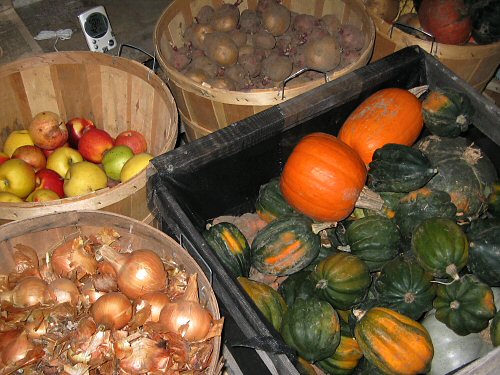
Squash are a wonderful family and they are rather long-lived. You can buy a lot in the fall around harvest time and keep them most of winter. Potatoes are so versatile, its like rice. If you happen to have a cold room, store them there, and add rutabagas, carrots, leeks and apples, so that they don't get lonely during the winter months.
Once you've got a hold of most of these guys, you're on your way to have a decent pantry. Of the things that I don't mention that fall into the "good idea" contingent, you could throw in a few cans of good soup (its worth hunting around for the stuff), pre-made pasta sauce (you can always kick it up a few notches) and bouillon cubes. Already with that stuff here you can make a decent selection of dishes; when you add in some of them upcoming staple friends, you'll be multiplying your menu.
While it's true that its not so much what you have, but what you do with it that matters, quality does count, when you can afford it. You don't have to go and splurge on everything every week, but keep an eye out for opportunities and make the best use of your supplies and suppliers. In the end, yur patience will be rewarded.
Now, when I say dry goods I don't necessarily imply that they are actually dry things that you need to boil before you can use; what I mean by dry goods are items that you would have in your pantry that require no special storing methods to keep them. Pretty much anything that is "store and forget" is filed under the general heading of dry goods.
First off, you have to have some starches at hand. You should have a selection of pastas, for which I would recommend having two or three different kinds at hand. Go for some long noodles, like linguine, spaghetti or tagliatelle, and some short, like penne rigate, elbow macaroni or farfalle. You should have some long and some short, as they deal with different types of dishes and sauces, and variety is always a good thing. By default you'll want to go for ones that are listed as being made of durum (hard) wheat, but if you have particular requirements, whole wheat, spelt and rice (for the gluten-free dieters) are possible options.
Another starch you should keep at all time is the multitasking rice. A good amount of good old long grain white is a must, but you can add in some basmati, jasmine or brown rice for variety and different match-ups in your ethnic dinning. If you have a good freezer and a microwave, you can prepare large batches of rice, portion and freeze it, saving you quite a bit of time for when you're running short.
There are a few items that are worth keeping around in the canned goods: a few cans of beans saves you a lot of hassle and work, and you don't really save much by buying the dry stuff and cooking it yourself. Personally I keep white kidney, chick peas and some mixed beans on the shelves, its an easy source of extra proteins when you're short on meats, or if you need to get vegetarian in a pinch.
Tomatoes, both whole and diced are a must if you enjoy quick pasta dishes; they also come in handy when preparing stews and chilli, not to mention soups or couscous. A useful (and delicious) supply to keep around is some form of olives: a can of good old black olives, pitted and kept in water is an easy source of proteins, and an quick way to vary many dishes. Personally, my go-to varieties are plain black, Kalamata, Moroccan sun dried and pitted green in brine.
Speaking of sun dried, sun dried tomatoes are something of a must, an easy and convenient way to keep the fruit around all year without them going bad on you. Whether you get the dry bagged ones, or those in oil, they are incredibly useful and an easy way to party up a pizza, pasta sauce or stew. My preference is for the ones in oil; you'll want to try a few brands, as they are not all equal, some are dry and nasty, others tender and delicious.
Rounding up the pantry, we're looking at the unprocessed stuff that you can (and should) have around. Onions should always be present, as they are truly a basic item, and can be a meal unto themselves. Garlic go without saying, and if you're feeling adventurous, a small bag of shallots come in handy when you want either small quantities, or just something a little more subtle.
Squash are a wonderful family and they are rather long-lived. You can buy a lot in the fall around harvest time and keep them most of winter. Potatoes are so versatile, its like rice. If you happen to have a cold room, store them there, and add rutabagas, carrots, leeks and apples, so that they don't get lonely during the winter months.
Once you've got a hold of most of these guys, you're on your way to have a decent pantry. Of the things that I don't mention that fall into the "good idea" contingent, you could throw in a few cans of good soup (its worth hunting around for the stuff), pre-made pasta sauce (you can always kick it up a few notches) and bouillon cubes. Already with that stuff here you can make a decent selection of dishes; when you add in some of them upcoming staple friends, you'll be multiplying your menu.
While it's true that its not so much what you have, but what you do with it that matters, quality does count, when you can afford it. You don't have to go and splurge on everything every week, but keep an eye out for opportunities and make the best use of your supplies and suppliers. In the end, yur patience will be rewarded.
Subscribe to:
Posts (Atom)