Sunday, June 1, 2014

What the other cowboys eat

We have been conditioned to see cowboys as the American staple, the white dudes with the ten gallons hats and all, herding cows through the wild west of the USA. But in reality, all that stuff was pretty much created by Mexican gauchos, chaps, hats, and all. And in real life, most cattle boys were fed beans, that most true American (and by that I mean truly the staple of the Americas) food.


There are still cowboys, dudes while truly live on the range, riding horses all day and rounding up herds, but they're not in North America, they are in the other hemisphere. In Argentina, Uruguay and southern Brazil, there's a whole culture of ranchers and dedicated meat eaters that would make paleo devotes shed tears of joy.
welcome to Buenos Aires
As part of the immigrant culture of south America, Germans who settled there brought with them many of their dishes, and adapted them to local products, just like immigrants everywhere. Pork is not unknown in the south, but it's definitely a cattle culture, and beef is the main  flesh roasted, braised and cooked in all manners and fashion.

The dish known as matambre in Argentina can find it's origin with rouladen, a German dish brought over by immigrants after the war. Thanks to my friend Valentine for pointing that out to me. Of course, some of the ingredients have been adapted, and we'll be doing the same with our preparation.

traditional matambre
Matambre is a thin slab of meat that is flavored with a stuffing, rolled, tied, and cooked. It's that simple. Because the cooking method will be a slow cooking process, you want to use a cheap cut. In my case, I use flank steak, which are easy to obtain from my regular Asian grocery store butcher. Now, we're not talking about individual steaks here, but a good slab of a few pounds. The first part of the process involves using a long sharp knife and splitting it along the thickness. It's a tricky move, but work slowly and carefully and you'll be fine. What you want to do is get two slabs of about a half of an inch thick. Depending on the thickness of your cut, you may have to trim it further. Try to get two slabs of around the same size. Any extra trimming could then be used for other preparations.

my matambre
Once that your meat is ready, you'll need to consider your stuffing. I would advise to use long thin cuts of vegetable, like onion, carrots, celery, bell pepper, napa cabbage, or other hardy greens. Some mushrooms always go nicely, so be generous and put in big slices. Argentinians will throw in hard boiled eggs, Germans some pickles. Personally, I have put in pitted olives to great results. Whether you flavor the meat will depend on personal taste and cooking method. Once that you have your preparation ready, you will need to roll and tie it. That is an entire skill into itself, and well worth practicing. I would advise a long piece of kitchen twine and knots at regular intervals.

Whatever else you will do, start by browning you roll to give it a nice crust. A simple sprinkling of salt and pepper on the outside will help give the crust extra flavor, just don't overdo it. You just want to make sure that most of the external raw is nice and brown.

Once that this is done, take your rolls and put them in a large enough container (a casserole dish, roasting pan, cast iron frying pan, or other oven-proof dish) and cover. If you have no lid, then use your friendly tin foil. Stick in the oven at 300 f for about an hour a pound. At this point, you have a choice between dry heat or wet. I have done both, and I have found that a good tomato sauce really helps the cooking process.

dry roasted and delicious

Traditionally, matambre is eaten cold, or room temperature, as a sort of cold cut, but I cut it in slices and top some filler with it. It would go well with rice, bulgur, egg noodles, or orzo. You could also use it as a garnish in a home ramen soup, if you dry-cooked it. With a bit of extra vegetables, you can stretch the rolls to several people, all depending on the appetite.

Wednesday, May 21, 2014

If it's not soy, can it be tofu?


And why would it not be?

As an omnivore, I have an open-minded view of most food. While I may well have a great disdain for certain meat-replacement products (if you make the choice to not eat meat, please go the whole mile and don't get "I can't believe it's not meat" products,) I am opened to meat substitutes. Unfortunately, this generally means tofu and other soy products, something that is as nutritious to me as are dairy products to someone who suffers from lactose intolerance (and there are more people who are allergic to soy than there are those allergic to dairy) which I have tried on several occasions, to disastrous results.

So soy being out of the question, what else is there? Pulses and mushrooms are your safest bets, but even those have their own limitations. So when I stumbled upon this recipe in one of my latest purchases, I just had to give it a try, to see if it was a good deal.

And it is.

Informally known as Shan tofu, as the product originates from the Shan people of Burma, it involved making a sort of tofu not with soy, but with chick pea flour. The best thing about this, besides the fact that it's not soy, is that it's easy to make at home and requires very little ingredients, and very little time to make. It's also great because it already comes with a lightly nutty flavor, and none of the grittiness of soy tofu, so it's a plus. However, it does not have tofu's flavor soaking characteristic, which I've never found to work anyways.

Anyways, here's the very simple process, illustrated by my very own kitchen. Thanks to my sous-chef Natasha for the assistance.
                                                                                 

Take two cups of chick pea flour, two-and-a-half tea spoons of salt and two cups of water; put together in a bowl and  whisk it to a smooth consistency. Whether you use a hand whisk or an electric one doesn't really matter, as long as it's blended well and smooth, free of any clumps. Depending on your source flour, you may want to sift it to keep out the largest grit, but it's more a matter of texture at this point. Once that you are satisfied with the texture, leave it to rest a few minutes.
                                                                             

In a thick bottomed and fairly wide pot, bring four cups of water to a boil at high heat. A deep cast iron pan, well seasoned could do the job, but you may want something more neutral, so that you don't affect the taste. When your water is boiling, reduce to medium high, give the batter a few more whisks to wake it up and pour the lot into the water. It will froth at the beginning, that's fine, stir a little, then bring down to medium heat.
                                                                                 
You will want to keep stirring, to keep the batter from sticking to the bottom (an enameled pot works wonders in this case) and to keep the consistency as homogenous as possible. You want to keep the action going anywhere from two to five minutes. You will feel the batter thickening, and pockets of steam will pop up, also a good sign. The longer the cooking time, the thicker the tofu. When you feel the it is the consistency that you want, pour the batter into a couple of greased bread loaf molds. I would recommend glass or ceramic, because it makes it easier to handle and demold when ready. The size of your container will also determine the texture, as the narrower mold, the ticker the tofu. Personally, I use a large casserole dish.
                                                                                 
Once poured, even it out as best as you can, and leave to rest at least an hour at room temperature. You can use it at that point, or you can put it in the fridge to firm up more, covered with a plastic sheet, directly on the surface, to minimize the buildup of a crust.

So, now that you have this tofu, what to do with it? For one thing, you can use the firm tofu, cut in cubes, as your protein in soups or stir fry. You can also deep fry it, which will build a nice outer crust, sealing the smooth inner texture. These delicious cubes can then be consumed as just finger food (sauce optional, really) or they could be used in a curry, the fried crust preventing them from disintegrating. The texture of your tofu will guide you on how you will serve it. The shorter the cooking time, the creamier, so the they will very easily come apart in soups or when frying; when cooked longer, they get firmer and more tolerant to abuse. When deep-frying, the creamy one will have a nice crispy crust with a creamy center, while the firmer will turn into something akin the savory marshmallows; either are good. The Shan also thinly shave them and use them as noodles of sort.
                                                                                   
Fried tofu, like savory marshmallows
So as you can see, in about ten minutes of work, say in the evening, you can prepare a good amount of versatile protein that is vegetarian and vegan friendly, that even carnivores will enjoy. Were you to get a bag of flour (about the same price as wheat flour) just for that purpose, you will be able to very cheaply supply your own protein, and pull a magic trick that will amaze your friends.

Saturday, May 10, 2014

A bit of food porn

First off, let's look at some matambre


This was the very first attempt, where I simply slow-roasted it. Served with roasted vegetables on lettuce.


In this instance, I stewed it in chunky tomato sauce, on egg noodles and steamed green beans.


The latest iteration, slow-cooked in roasted tomato and garlic sauce. The sauce itself is pretty fantastic.


Homemade subs. I honestly do not recall what I put in them, but it was oriental in flavor.


Finally, today's breakfast, where the international man of cuisine strikes again: a mix of Southern Europe, with Northern Africa and South-East Asia. Shakshuka meets ratatouille, with fried Shan tofu. It's amazing stuff.

I am going to show how to prepare many of these and more in upcoming posts (I know I haven't been posting much,) as soon as I can decide with what to go with next!

Saturday, April 5, 2014

Heart of the matter

Hello dear readers and welcome back to myself.

I have been exploring a lot of different things in my long absence, and I will endeavor to share my discoveries and experiments with with you. Some of my explorations have been new techniques, others new recipes; definitely new styles, and interesting new ingredients.

As a matter of fact, the inaugural return post with deal with something that was very trendy (tho now getting out of fashion) in cool cuisine, which is offal. Offal (which sounds like awful, and which most people with so-called civilized tastes will consider them so) are the odd bits of animal that are not easily thrown on a grill for a manly meal. Most of them are pretty much un-barbecueable, and so, not worth consideration. They are also in some way a source of shame, as they are not the sanitized steaks and roasts, anonymous pieces of flesh; they are the kidneys and tripes, oxtails and pork belly, trotters and tongues, and the subject of this entry, the hearts. 

They remind us civilized, modern people that the meat comes from a living beast, but also that for most of us, our families did not always have the monies to get the good stuff, so they had to get creative with the leftover bits. It's all good, since that such thrift gave us the wonders of cured meats and sausages, but the internal bit, with required more care and knowledge are just as delicious and interesting, common through the majority of human culture and cuisines. It totally falls into the nose-to-tale philosophy of chefs like Fergus Anderson.


Hearts are probably easier to find in ethnic grocery stores and good butcher shops. Locally I am more easily able to find pork hearts, but I found that my local grocery store also carries beef heart. Chicken hearts are some of the most commonly available odd bits in most grocery stores, but their size makes their preparation different, and thus, the subject of a different entry.

There is a significant difference in size between beef and pork hearts. If you want to try your hand on the cheap, I'd suggest pork, unless your dietary restrictions do not permit you so, then go for beef. Of course, if you can get your hands on lamb, veal or goat, then by all means use that, the principles are the same.

You'll notice that whichever kind you'll get is already partially trimmed and will have several cuts; this has to do with the food inspection agencies that will require those cuts to inspect the flesh for any sort of defect or parasites. In some ways, this will be handy for use when we'll be preparing the meat, in some others, it will be something of a burden. As much work as has been done, it still needs to be trimmed further. Here's Chris Cosentinoanother chef who became known for using offal is showing how to trim a beef's heart:


Of course, a pork heart is smaller, so doing these nice steak-like cuts are not realistic. Given the cuts in the organ, it's difficult (but not impossible) to use the organ whole, but for a first time, your best bet is to use them to separate it in easy to handle pieces. Do not throw away the trimming, as while they are not easily eaten, they should be kept aside to make a very flavorful stock.

Once that you have trimmed it all, start dicing your pieces in fairly equal portions and using a very sharp knife, a mezzaluna, or a meat grinder, chop it all to as small, fairly equal chunks as possible or desirable. My suggestion of choice at this point would be to mix that up with ground meat, a mix of beef and pork being a good choice to keep the right balance of flavor and moistness.

Another way would be to cut it into strips of equal sizes and pan fry them on high heat. A third, if you're feeling ambitious , would be to keep it whole and stuff it. The one very important thing to keep in mind about hearths is that it is lean, flavorful meat. The fat is trimmed  and lays entirely on the outside. Keeping in mind that fact, it has a deciding factor on the cooking method: either quick on high heat, or slow in a braise or stew. If your selection is super fresh, you could clean and chop it finely and serve it as a tartar, but it would be something that I would only recommend for beef or veal, maybe lamb, but not for "white meats," due to the higher chance of salmonella or other bacterial infections.

In upcoming posts, I will detail some of the methods that heart can be used according to the cooking methods. 

Thursday, March 22, 2012

Down the Big Easy

American cuisine is easy to laugh at; after all, what do most people across the world know about American cuisine but McD, fried chicken and bad takeout? The truth is that there is no such thing as an American cuisine, as the United States are a collection of different cultures and geographies, with different ethnic makeups and nutritional requirements.

Louisiana is a prime example of this trait: originally founded by the French, sold to the American colonies, then populated by Spaniards and African slaves, who formed what is Creole culture, while the Acadian refugees formed the Cajun country. Everybody intermingled reluctantly with local tribes, but survival demanded that they all learned from each other. The mix of cultures intermixed techniques and necessity, and a constant battering of heat and storms birthed blues and one of the most occult culture in the Americas.

If you were to ask what is the signature dish of Louisiana, the majority would claim gumbo their relief, tho jambalaya is a close second. Creole/cajun cuisine has been described as hard to pull off, and I'd lay the blame at the cajun roux, which a mixture of flour cooked in butter until it is a hair's breath from burning. That is certainly a skill that could be well-worth developing, but I've decided to skip that lesson for now and just move on to make a delicious and hearty dish that never fails to please.

The first thing that you have to consider when you make gumbo is what your thickener will be; that is the purpose of the roux after all. You have in fact three other options: onions, tomatoes and okra. I will tend to use all three myself, both for flavor as for what they bring to the mix.

Start with a couple of good white onions that have been either thinly sliced or finely chopped, either works. You are going to poach them in a good quantity of fairly neutral fat; basic vegetable oil or ghee works fine. Add some chopped celery and a bell pepper or two (one green, and one red or yellow, for variety) and stir, getting it to soften. If you are going to use okra, this is the time to add it in. Its better to use pre-cut frozen stuff, it just makes things easier. Stir until soft, then add garlic to taste. Add meats like sausage, bacon cubes, or other bits of meat in small bite-size. Brown, then add tomatoes. Finally pour in as much stock as you want, keeping in mind whether you want to make it a stew or a soup.

Bring to a boil, then lower the heat to a simmer, for a good forty-five minutes. Towards the end of the cooking time, add whatever seafood you happen to have on hand. What flavoring you add will entirely depend on what you have at hand, but try to keep it simple: a light touch of kosher salt, ground black pepper, oregano, thyme. I'd suggest experimenting, but don't overdo it, or you'll drown out the other flavors.  Serve with rice or biscuit.

This is one seriously easy dish; in fact, you get so into it that your loved ones will most likely ask you to stop making it because they have had enough for a while. You can use different meats, all depending what you happen to have at hand. The minimal ingredients I would say comes down to onion, bell pepper, celery, meat and stock. This is a great way to get some use of vegetable odds and ends, like that half tomato you used for lunch and those potatoes that are sprouting legs and are trying to escape. Clean the lot and toss in!

Monday, January 30, 2012

Laying low and delicious.

I have taken a long break from the blog, but I am returning to bring you more useful tips, info and techniques to help you develop your inner cook. Today will be something of a two-for-one deal, probably because its a Monday at the end of the month, when money's getting tight in expectation of the budget hit when rent comes due in a few days. So we're going to look at a nice technique that will make a good impression and will allow you to open a new branch of flavors in your meals: poaching.

First off, a definition: poaching is a cooking term that means slowly cooking in liquid. Its not boiling, as poaching requires a much lower level of heat, and the liquid used will often not turn into a sauce. Its a more delicate technique, but that can result in very interesting results.


The most common poached food you might have come in contact with is poached eggs, especially in the posh breakfast staple, egg benedictine. Poached eggs are an easy way to learn the basics, and cheap to: all you need is a cooking vessel, either a sauce pan or a frying pan deep enough to hold the cooking liquid and the egg, water, an acid flavouring agent (good vinegar or lemon juice) and an egg of two. A ramekin comes in handy to manage the pouring on the egg.

Fill the vessel with water and add about a spoonful of your acid agent. Bring to a very light simmer, making sure you not only not boil the water, but just enough that you can see a very gentle roll in the liquid. Crack the egg in the ramekin, being careful to keep the yolk whole. Pour the egg gently into the water, then cover and turn off the heat; this will prevent the whites from cooking too tough at the bottom. Let stand, undisturbed for three minutes, then remove using a slotted spoon. The white should be just set enough to keep it together and the yolk should be barely set on the edges but runny.

Its an easy, no-mess way of preparing your eggs in the morning, keeping the scent of cooking food to a minimum. Also, its a delicious way to impress that date you brought home last night and that stayed over for breakfast. Some now you know how to poach eggs; the same basic technique can be used for other, more delicate foods, like fish, chicken, or fruits, using different cooking liquids. Now, here's my favourite poached preparation, poached onions, or onion confit.


The idea is the same, but the items are cooked in this fashion more as a preservation method. The start example of this is duck or goose confit, originally from south western France, where the birds and cut into pieces, cured, and then poached into cooking fat, usually their own. The parts are then put into jars that are then filled to cover with the cooking fat to seal. The preparations can then keep for long periods with minimal refrigeration.

In Italy and southern France, condiments like onions, garlic and chilies. The preparation is very simple, if a little time-consuming, definitely something of the "slow food" movement. The basic elements required for this is a thick frying pan, olive oil and onions. Simple.

First, thinly slice your onions. Just half and slice, keep it simple. Then, put a good amount of olive oil in the pan a bring to a low heat, basically medium-low, edging towards the low side; you don want to fry your onions, just heat them in the oil. When you're confident that oil is at the right temperature, add the slices, and stir to ensure that everything is spread out. There should be plenty of oil, as it acts as the poaching medium. I like to add a bit of thinly sliced or crushed garlic to the mix, for flavor and to balance the chemistry, and a pinch or two of kosher salt to help the onions sweat. A few drops of balsamic vinegar, some herbs (oregano, rosemary and thyme work well), a touch of sugar also can help you shape the flavors.

This will need to cook for a good forty-five minutes, stirring occasionally. Adjust the heat as needed to avoid the crusting at the bottom of the pan. It is ready when the onions nearly disintegrate. You want a very soft mixture. Take off from the heat and use.


It makes a great alternative to tomato sauce in pizza and pasta, and its a great way to build a base for a ragout or stew sauce. And its a perfect base for our next blog entry, gumbo!

Thursday, September 1, 2011

Gone, but not forgotten

I have not been updating the blog lately, but its not that I have forgotten, its just that life gets in the way of fun, you know what I mean? So here's a couple of very useful instructionals on proper knife grip and sharpening. Once that you've mastered that, you'll find that you save yourself a lot of hassle and time, not to mention a lot less crushed vegetables and knife cuts.


And notice that in the background, you can see how this professional chef stores his kitchen tools, and that's also how you can store yours, cheaply and effectively: recycle and reuse your large tin cans. If you get a couple of large cans of tomato juice (more than likely if you are a fan of Bloody Marys) or olive oil (economy of scale folks!), just take off the top using a good can opener, clean it well and store all those non-sharp tools on handles. It'll save you from spending extra cash and will help decorate your kitchen with theme-appropriate elements. You can well use coffee cans for the smaller items; variety is the spice of life (and maintains your sanity when applied to your diet.)

Tuesday, July 5, 2011

Ramsay's at it again!

Alright, I haven't done a recipe in a while, so here's Gordon Ramsay showing you just how easy it is to prepare roasted duck breast:


Now, you'll say that duck is expensive, especially if you buy just the breast, which is true... that is, any meat will be expensive when you buy just the cuts, but if you buy the whole beast and prepare it yourself, you'll not only save money on the individual purchases, but you'll gain so much different products that it'll be well worth the effort and initial cash output to convert you over.

I'll be going through the bird portioning in an upcoming post.

Saturday, June 25, 2011

Kitchen basics: its all in the sauce

We've covered a lot of the pantry already, so we're ready to do the final stage, those little elements that already exist, fully composed that can add extra flavors, either by being condiments, or by their complex value-adding properties. Most of these guys will be housed in bottles or jars, and many of them do not require refrigeration.

Worcestershire sauce: the old mainstay of pretty much every kitchen. It might have a very British name, but it's origins are nothing but; it was a recipe brought over from India, and is used as a flavor enhancer. Its a great enabler for meats, taking a somewhat boring cut to another level. Mix it in your meatballs, rub it on your steak, drip some in your sauce, its pretty much a carnivore's essential, and available everywhere.

Mustard: the classic condiment and the one item that is pretty much guaranteed to be found in the otherwise empty fridge at that new apartment you just moved in to. There certainly is a fairly broad variety of mustard mixes, but it essentially comes down to three kinds: yellow, Dijon and horseradish. For our purposes, I'll stay with the essentials: have a jar of yellow mustard and a jar of good French Dijon at hand. Dijon mustard is like Balsamic vinegar, as there is a pretty broad variety of heat, texture and flavors, so you'll have to try and taste, until you find the one(s) that you like. I personally am something of a mustard collector, with something like fifteen different jars of mustard, mostly Dijon, but several flavored types, like honey, balsamic, white wine and garlic. If you really want to burn your mouth off, then go for Grey Poupon, but me, I'll stick to rustic stone ground, if its all the same to you

Ketchup: again, the classic condiment in its bright red sauce and squeeze bottle container, it has its uses beyond just improving your fast food. it can be added on to your sauces to add both sweetness and tomato flavor. Get a good jar of the rustic chunky stuff and you will be thankful for it. Its a great way to add flavor to your burgers while adding a good kick of vegetables. In the hands of a creative cook, this can be turned into different sauces or flavor components. While there are commercially available varieties (some of them quite good), look at farmer's markets for the farm-made stuff, many of them are pretty incredible and you'll go through them pretty quickly, whether it in the summer with the results of your barbecue endeavors, or in winter to vary your roasts, braised meats or meat pies.
Salted herbs: you'll probably have a hard time getting your hands on this, as its one of those local products, but its a pretty invaluable asset in my flavor arsenal. Essentially, this is a mixture of finely chopped herbs, with a few vegetables, ripe off of the garden and preserved in salt, giving you access to these green flavors all year around. There are recipes available on the net for those who feel the need to experiment. Me, I just reach for the jar on the shelf and add them to my mash, soups, sauces, roasting vegetables spice mix...

Soy sauce: the Chinese Worcestershire sauce, its the essential flavor and color add-on to so many Chinese dishes that anybody who wants to do some Asian food who doesn't have some at hand is kidding herself. While available in any grocery store, after trying out different products, I would highly encourage you to get the imported stuff. Its not that the VH or other home brews are bad, but... no. Go a little out of your way, get the good stuff like Kikkoman. While you're at the Asian shop, look at picking up tamari and mirin. Tamari is a soy sauce, but somewhat stronger flavored, while mirin in a cooking rice wine. Both of these are key components of Japanese cuisine.

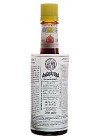
Angostura bitters: the enhancer from Trinidad, made from a secret mixture of herbs, roots and possibly vaudou, its one of those who pack a big punch is a tiny amount. Most commonly used in cocktails, try using it in soups, sauces, or in any other situation where adding some amplifier would be a good idea. You really don't need to add a lot; a few drops are generally enough. Easily available in any grocery store that also carries wines, and is generally found right next to the maraschino syrup.

Harissa: the Tunisia hot sauce common to all of North Africa, it will bring both heat and flavor to those tagines and other middle-eastern dishes, prefect for hot summer nights or a taste of the exotic at any time of the year. It can be found in specialty shops, and of course, in ethnic grocery stores. In those shop, expect to find their home brew (and far superior mix), but you'll probably have to use it fairly fast. It is also conveniently found in resealable tubes, just like toothpaste. Don't mix them up, unless you feel like playing a nasty prank on your hungover roommate.

Pesto: going on a milder streak here, we're looking at an essential Italian staple for the magical quick-fix when a simple, yet flavorful sauce is needed. Essentially a fresh basil and olive oil mix, with the essential parmegiano and pine nuts. Unless you love arguments, don't ask Italians which one is the best, every nonna has her secret recipe blend that is, of course, the best. Tho its fun to see them argue about it. Pesto can be fragile, so once that the jar is opened, keep it in the fridge and make sure that there is always a layer of olive oil on top, it acts as a sealing cap and prevents mold.

Besides the ready to use concoction, there's a few others that don't quite fit in the other basics categories, but that you should have on hand because of their versatility and their usefulness.

Honey: honey is the old school sweetener, used since time immemorial to infuse a dish or drink with deliciousness that masks its otherwise bland nature. A spoonful of honey mixed in the cooking rice turns the dish into something far more appealing. It can also replace sugar in certain savory preparations where it's flavors would work in combination with the existing spices. And its great to have on hand to make tea more appealing and to treat a sore throat in winter.

Maple syrup: like honey it can be used as a sweetener (say for a Sunday morning coffee) or a flavor enhancer. Used sparingly, as I know that for most of you, its going to be hard to come by and/or expensive, but dont bother with so-called table syrup, its s terrible imitation.

Dried vegetables: a convenient mixture that comes in several varieties, useful for flavoring rice and to create quick soups from scratch. Treat it like flavoring herbs and use moderately if you want to stretch your supplies.

Vanilla: get the real stuff, not the artificial junk, even if its cheaper. A few drops are enough to either flavor directly, or enhance the flavor of many sweet dishes and baked goods. While you could got for the beans, they are rather on the pricey side, but if you feel that its the only way to go, then by all means, go for it, but use it smartly. The pods can be used to infuse a couple of times, so make sure that you keep them in an airtight container in the fridge after use.

Corn starch: not a flavor component, but a thickener. Its a quick way to thicken a sauce, to make a milk pudding and is pretty essential to Chinese cuisine. It is used in the marinade to help thicken the sauce, but also to make the flavors stick to the meats.

Toasted flour: basically, this is wheat flour that got toasted to a brown color. It is used to add color and flavor to sauces and gravy. Not essential, but useful to anybody who likes some delicious gravy or darker sauces

Bouillon cubes: they come in a variety of flavors and are a useful way to have stock at hand even if you have limited freezer space or cannot be bothered to make your own stock. Its a base, so you'll have to add some flavorings to that, but it takes little to turn a basic chicken or vegetable bouillon into a delicious soup. Think or your basic Ramen for example...

Once that you've got your flavors down, you turn the bland into the extraordinary, which is great relief to the down and out. With some practice, you'll start saving money, simply because when you'll eat your takeouts, it will be so below what you can make at home that you wont bother much and just whip out your own meals. And if you still have access to cheap and delicious eats, then congratulations, you are lucky buggers. Send us pictures and be happy.

For the rest of you, to your cutting boards and dish out!

Friday, June 10, 2011

Intermezzo

I'm taking a short break from the blog, as I am working on a few projects that are taking up some of my time. There should be a new post in a few days, so don't go thinking that I've dropped this work; there's loads of material yet to cover, so stay tuned!

Sunday, May 29, 2011

Kitchen basics: the flavor has it

A few years back, I had to spend some time in the hospital. In the circumstances, is was offered nourishment, which they referred to as "food" but I called it "crap." Because I was refusing their terrible offerings, they assumed that I was refusing to eat and was starving myself; so they stuffed a feeding tube straight to my stomach and fed me the bare minimum to make sure I'd live, just enough to try to make me hungry enough to eat their porridge.

Its failed miserably, because they worked on a false premise: I wasn't refusing to eat food, I was refusing to eat those meals that they were serving me as food. Because, while they may have been nutritionally whole, they were the blandest, most depressing collections of foodstuff one can be forced to consume. I eventually managed to talk to the nutritionist and striker a deal: stop that gruel crap and let me feed myself, then decide if I'm starving. Given that within twenty-four hours I had consumed more calories than they were injecting me with eventually broke them down and they took the tube out.

The secret was in the flavors, something that they didn't concern themselves with.

In this edition of kitchen basics, we'll be looking at those flavor elements that are oh, so important for your pantry, as they are the springs of magic that turn a bland pita bread into a delicious delicacy and make salads come to life.

What exactly do I mean by flavors then? We are talking about the basic foodstuffs that bring life to the party, can be combined to turn good into great and will define the dish you are trying to create: vinegars, oils, herbs, spices and other simple flavor elements that bring a much greater punch than their size could indicate.

Vinegars

One should always have some vinegar around. While plain old white vinegar has some pretty limited uses, it is useful as a chemical reactor when combined with baking soda.

The one important flavor agent is balsamic; you should have a jar or two of balsamic vinegar around, as they really stand out form the rest. For the affictionato, it is the only vinegar that changes as it ages. Have a bottle of young (3-6 years old) for salad dressing and the likes, and a jar of older (9 year old) for those time that you want both punch and sweetness. If you feel like being fancy, you could do a reduction, where you simmer it until it has reduced to half it quantity, which will make it thicker and sweeter.

Depending on your ethnic palate, you may want to have rice wine vinegar, for the Asian repertoire; white wine vinegar, for a different base for your salad dressing or mayonnaise; and cider vinegar, again, a different variant on flavors. One bottle can last quite a long time, so you can never really say that you have too many, unless of course you have too many.

Oils

I have talked about cooking fats before and some of those will definitely cross-task with flavor agents. One difference here is that they are to be used not so much for their heat properties as for their taste. Top of the list here is a good olive oil, extra-virgin and cold-pressed. This is a case here where you'll probably want a fruitier variant, as it will shine through the preparation.

Other oils to look out for as flavor include sesame (for Asian kick), nuts (excellent for salads) and a large variety of flavored oils, again for salads, but also to add some finishing flavors to pasta, pizza and certain sautes.

Herbs

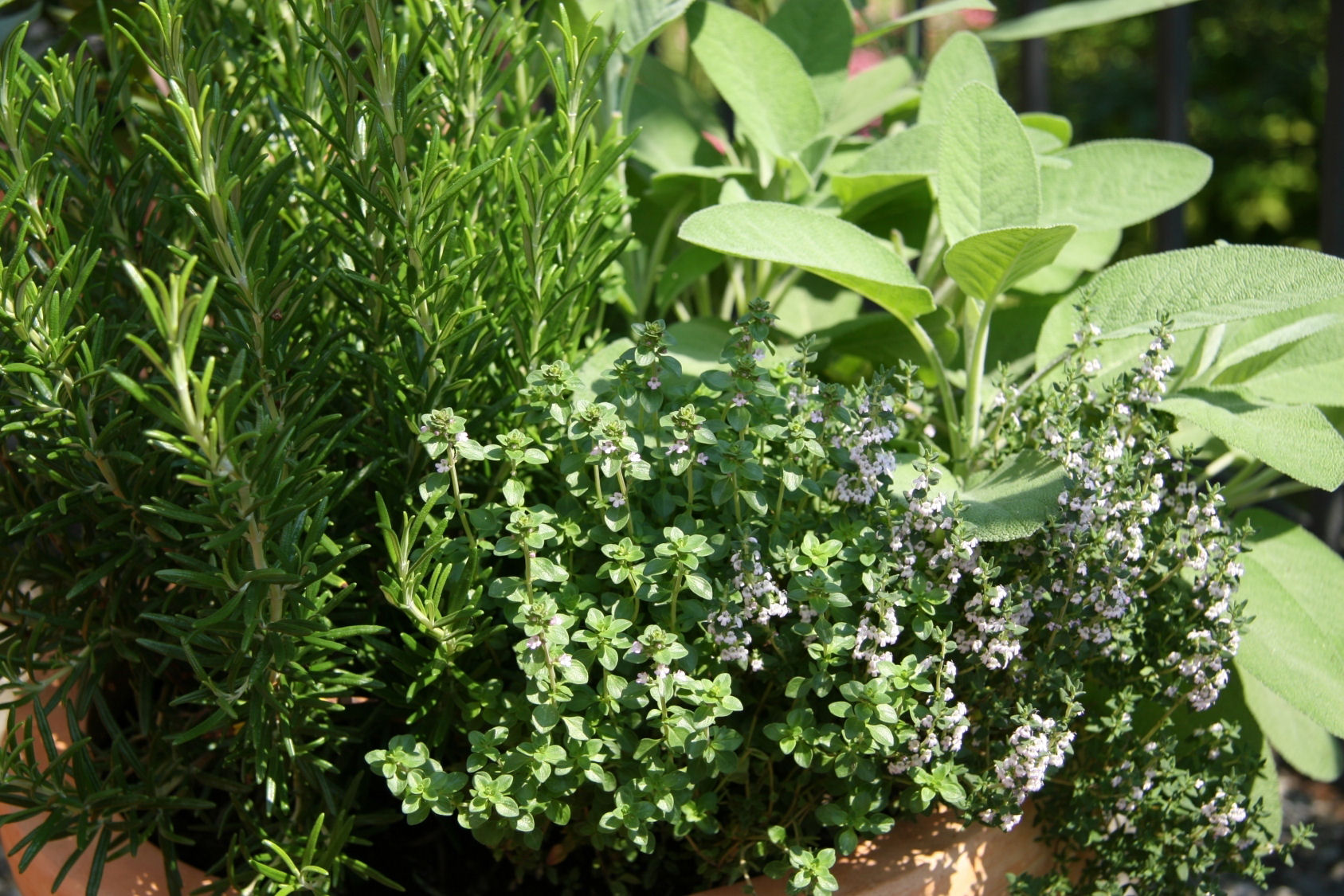
Herbs are the old school way to flavor a dish. While it is true that fresh is always better, its not always possible, as it can be difficult to use the entire amount that you are forced to buy by the time that they go bad, unless you start growing them yourself; its a bit of an investment, but you'll save in the long run, and you'll always have your green friends ready and at hand in manageable quantities.

First off, one of your reliable sidekick is oregano; its usable in many different cuisines and it'll probably be the first one you'll run out of.

Basil is one of those herbs, like parsley that should only ever be bought and used fresh. There is a certain variety depending on the region of origin, but sticking of good old sweet basil should get you through most of your needs. Its a simple and delicious way to flavor up a salad or a simple summer soup.

Chives is another great standby, for the subtle touch of onion without being overpowering.  

Rosemary is a great match for both fish and lamb, so its a great friend for anything Mediterranean.  

Parsley and coriander serve the same purpose for different cuisines. While it might imply that they are interchangeable, they are not, as their flavor and impact differ strongly enough to ruin the dish.  

Bay leaf is a misunderstood, yet essential add-on to any stock, stew or ragout that will involve fatty meats, Its job is to cut the impact of the fats and it does the job wonderfully; just take it out before you serve.

Mint is another lamb friend, and it a great way to flavor rice or couscous.

Thyme is a base flavoring for stocks, meat dishes and for your pickled eggs.

Spices

I refer to spices both the powders and seeds that are used to build wonderful aromas and delightful sauces.

One of my most important spice in cumin, a wonderful additive for any meat dish, as well as Eastern European and Indian concoctions. It is available both in powder and seed form, to be used in different contexts.

Paprika is the one spice that most American pantries had after the war, along with black pepper and salt; it was used mostly as a color element, when you felt like being daring and fancy. Its is the all-important base for goulash, and can also be used in a variety of ways for sauces and other concoctions, adding dept and color to the mix. It originates from either Spain or Hungary, and while we mostly see it as either mild or hot, there are more possible varieties, available according to your local suppliers.

Peppercorn comes in several variety: black, white, green, pink, Szechuan; in reality, they are, in order: whole, skinned, unripe, bud and the aromatic fruit pod of a different plant. While as  much as possible you should buy only whole corns and grind them on the spot for maximum flavor, it is also possible to buy it pre-ground, tho not exactly recommended, due to the possibility of it being cut with peanut shells and other fillers. You can also obtain both the green and pink variety in brine, which are used for sauces primarily.

Turmeric is a ginger relative and widely used in Middle Eastern and South East Asian cuisine, both for color and flavor. You could well use it in the same way as you would paprika; it is an essential component to curry mixes and several Persian dishes. It has reputed health benefits that are under investigation, but its good stuff anyways that could be added in to any spice mix where a bit of yellow would not cause any trouble.

Cinnamon comes both in powder and stick form, but even more importantly, comes both in genuine and stand-in, the stand-in being the most common. Cinnamon is stronger and looks like thin, crumbly sheets, while cassia is the milder, tough sticks that we are used to. It is a great way to flavor drinks and stocks, as well as several sorts of baked goods.

Mustard comes in either powder or seed form, used in different dishes for different purposes. In powder form, you would use is as part of a dry rub, or to flavor meatballs. As a seed, it would be used in certain Indian preparations, as well as in many Eastern European dishes, like sauerkraut.

Chilies

The friendly and not-so-friendly pepper family covers the whole gamut from the sweet bell pepper, all the way to pain-inducing bad boys like ghost nagas. Unless you absolutely want to melt your teeth and stomach lining, you'll want to keep a certain variety of peppers at hand for different purposes. One simple rule to stick by when using hot peppers is to keep it flavorful. If you have packed so much heat that its the only thing you notice about your food, all you've made is a frat boy bet, and Texans will backhand you all the way back to the pioneers.

Poblano, also known as ancho or mulato are at the bottom of the heat scale, just above bell peppers. When the ripen and dry they turn very dark, nearly black; their low heat, flavor and color makes them a wonderful component of the more approachable moles. Unless you are in the harvest season, you'll find it dried and will need to be ground.

Jalapeno peppers are at the low curve of the Scoville scale, which means that while you may go a little more wild with this, its also one that can be used in other ways than just as a heat source in your dish. They could be stuffed and grilled or braised, and served as appetizers, for instance. Available fresh and in various preserved forms.

Chipotle are ripe and smoked jalapenos. Most likely you'll find those whole and dried, so you'll have to grind them. Not as hot, but a great way to add a more subtle element to your mix.

Serrano is the most commonly used chili in Mexican cuisine. It rates higher than jalapeno on the scale, but the locals eat it raw.

Cayenne peppers are the next step for commonly used chilies on the scale. They pack a pretty good punch, and can be found whole dried, as well as in powder form. Add in small increments and taste as you go along, so that you don't end up with nothing but burns.

Bird's eye is a very small chili, but don't let the size fool you. This is the variety that is most commonly used in Chinese, as well as certain African cuisines. Its punch is pretty high, just under the old hottest pepper record holder. Use sparingly, and practice caution.

Habanero and Scotch Bonnet are so closely related to be kissing cousins. They were the hottest peppers until some years back, when they found out about the ghost naga. This is pretty much the highest you should go on the heat scale. Easily found, you don't really need to toss several hacked-up peppers into your pot for the heat to come through. You could well just let it simmer in for a time and take it out before serving, unless you hate your guests and enjoy seeing adults cry in pain.

Salt

This really requires it own section, as it is not a spice, and is used both as a preservation agent, and as a method to enhance other flavors.

Table salt is the most common type, produced in such a way as to make it really easy to be used; its one to be avoided if possible, only useful for baking, really. It was originally developed for health reason, adding iodine because people didn't get enough of that required element in their diet. With municipal water supplies providing for that need, it is no longer required, but they haven't come around to doing anything about it.

Kosher salt is not Jewish, nor blessed by a rabbi; the name comes from the use of this salt to prepare kosher meat, to draw the blood out. It has several benefits, one of which is purity, devoid of additives. Its shape and structure makes it an excellent kitchen standby, and this is what you should have in your salt pig. You can be more liberal with this type, as it has less saltiness per mass than table salt. While it is more expensive, try it and see the difference. Its worth it.

Coarse or pickling salt is large grains of sea salt that are used for either preservation, as for pickling, brining or to prepare confit; or as a preparation method for certain dishes, like crackles and boeuf au sel. Not an essential basic, but its not expensive and lasts, so not a waste in any way.

Fleur de sel is salt hand harvested from sea water pools and treated to sun exposure. It also refers to certain varieties that originate from salt marshes or ancient salt deposits. It is most definitely a finisher, as a sprinkle on top of the dish before serving can both enhance the flavors and add and extra layer of texture. Expensive, so not an essential, and to be used sparingly.

Other aromatics
 
There are a few other flavor friends you should keep in mind, and possibly keep around if you use them regularly.

Lemons, while certainly a fridge staple, has so many uses in the kitchen that you should keep some close at hand. The rind can be ground or shredded, the pulp can be crushed to extract the juices, it can be sliced and used in cocktails or other beverages... just have some, and if possible, avoid the bottled stuff. You can also find in confit form, either in salt or in liquid. These are used for Middle Eastern and North African dishes and will take that tagine to a whole different level. Pick it up only if you know you'll use it, or make your own.

Garlic is an essential. And get over your irrational fear, it doesn't mess up your breath if used properly. Get whole cloves and use liberally, teaming it with onions, shallots or chives. While you can find in preserved, I prefer to just buy whole heads on them and use as needed. There are also very useful tubes, in the same veins as toothpaste, that will dispense crushed garlic paste, allowing you to use small amounts of it and keeping the rest safe for later use.

Ginger is another friend that can be used fresh, over the powder form. A few slices in chai, soup or stock will give things a whole different dimension. A necessity for anyone that wants to do stir fries and curries from scratch. While it keeps well in the fridge, the best method to preserve it is to bury it in a container filled with potting soil.

This obviously only covers a limited range of flavor agents. The purpose here is to give you a good idea of what is out there, and what to spend your hard-earned cash on. In full disclosure, when I moved into my first apartment, I bought a lot of spices and herbs, most of which remained unused for years. I simply didn't know what I was doing, so I didn't use them. Eventually, I just tossed most of it out (they do have a certain shelf life) and only bought what I used.

When you start with a more limited, but functional range, you are more likely to learn to use it, and use it properly. The whole purpose of aromatics is to take a staple like plain white rice, and by adding a few pinches of this and that, end up with a royal grade pilaf or risotto. That's what cooking is all about; making the ordinary, extraordinary.

Its a little bit of magic.

Tuesday, May 17, 2011

If by the sea...

There's something so French about a bowl of mussels, and comforting. The classic triumvirat of mussels, beer and Belgian fries stands out as one of the greatest whole meals one can have at a bistro. Its an awesome hands-on endeavor, no forks of knifes involved, just grab the food and shove it in. Its a return to childhood, but with adult greatness.


I used to not consider mussels a great thing to get at a bistro, the logic being, you get this huge bowl, but its mostly inedible shells, so in reality all you get a small amount of meat for too high a price. But once you do it at home, you learn that its not so much about the quantity of meat, but the whole of the experience that matters. Even if you skip the beer and sides, you still get a great dinner experience, a great weapon to have in you kitchen arsenal, with the warming weather and to balance out all that barbecueing that's going to obsess most of our suburban citizens.

Not that barbecue isn't fun and all, but every day?

To begin, get some fresh mussels. A two pound pack will set you back a little less than five dollars, and you can feed two to four people on that, depending on what you serve as a side. The mussels should be bought no more than a day before you intend to serve them, and as fresh as possible; there really isn't any healthful reasons to age seafood, just more likely that they'll go bad and cause severe food poisoning, so consider yourself warmed.

You need to start by picking through them for the dead and the shells that are cracked. Again, this is to prevent spoilage and food poisoning. The way to test them at this stage is by making sure that the shells are closed; if the shell is slightly cracked open, tap it gently with your fingernail. If it closes, its still alive and good. Toss all the shifty ones and the dead, don't feed them to your pets, its not worth the vet bills. Clean the shells by running them under cold water and trimming off any fibrous elements from the surface. Most of the time that job got done for you when they packed them, but better safe than sorry. Once that's taken care of, set aside.

Next, you want to make your base broth; a small sliced onion or French shallot; a clove of garlic, sliced or crushed; one tomato, diced; celery leaves, roughly chopped; Italian (or flat leaved) parsley, roughly chopped; cooking liquid. Using your stockpot, heat up some good olive oil over medium heat and sweat the onion or shallots until they soften and become translucent, then add garlic, heating slightly; never stop stirring, or you'll burn the stuff. Add the tomatoes, and the greens, warming it and stirring it up. When the tomatoes start to soften, add your cooking liquid. You really don't need a large amount, maybe about a cup or two at the bottom of the pot, and let simmer for about five minutes. At that time, add the mussels and cover.

The cooking time is pretty short, about 5-6 minutes. At that time, check on it to see if its ready; if the shells have opened, its done. Transfer to a large serving pot and pour the soup over the lot. Discard any shells that didn't opened, they were dead to begin with and are not edible.

Serve with a fresh baguette, or good bread, perhaps a nice green salad. This is a great way to have a social meal, as everybody shares the pot. Its also great for adults, as overall, his is a meal that is eaten nearly entirely with the hands, using one set of shells as a pincer to remove the flesh from the others. The cooking liquids make a very flavorful soups, and allows for an easy stretching of the mussels so that what would be a whole meal for two can be extended to four, especially if you have the baguette and the salad as accompaniment.

I use the vague term cooking liquid to give you full leeway as to what it could be. Use what you have, whether its beer, white wine,

Thursday, April 28, 2011

Kitchen basics: vegetables aren't all braindead


The current line of thinking in activist circles is that we eat too much meat and not enough vegetable, or at the very least, not enough plant matter. To which I can certainly agree; look at your average plate at most restaurant, and you'll see a large amount of what's on it taken over by two groups: meat and starch. This certainly affects our perception of what we eat at home, as we tend to focus a lot of the food items around a large piece of meat (and accompanying fat), which dings the grocery budget by quite a bit, and a large helping of rice/potato/pasta/bread or combo thereof.

For a restaurant, there is a simple logic to this: people love their meat, so that's the star of the plate and what draws the customers in, and starches and cheap and filling, making sure that the customer feels full; the vegetables on the other hand, tend to be mostly used as decoration (like that piece of tomato on the classic diner breakfast) or as a flavor bit, just to give the illusion that we are eating some veggies. That bit of salad on the plate is alright, but not particularly nutritious. That's why many salad offerings in most restaurants have cheese, croutons or bits of meat added in, to convince our programmed minds that we have a "real meal."

Truth is, there's not a lot of plants on the offering because of the costs: most vegetables have to be fresh, so they must be bought and used withing a few days of purchase, and most people are drawn in by the meat, which also dings the budget... you get where this is going.

So, what vegetables should be part of the kitchen staples then? To keep with the running heme, the ones that will be the most adaptable, and will provide the most bang for your buck by keeping well and making you want to eat them while they are fresh. And will make you want to save them if they start to go on the blink.

Tomatoes:
while technically they are classified as fruits, tomatoes are most often used in savory preparations. One thing that makes them so awesome is the variety of ways in which they can be used, sometimes in the same dish. For example, in a pasta sauce you could well use a can of diced tomatoes, some coulis and some tomato pasta, all bringing different actions to the dish. Pretty much any methods of preservation will be worth picking up, but my recommendation is to have a can or two of either whole or diced tomatoes, a tube of tomato paste (like toothpaste, it allows for only using a small amount at a time) and some sun dried, in oil or not, your choice. If you get them in oil, check the differences between brands, as they are not equal. Sometimes paying a dollar more will really pay off in the quality of the product.

Making a habit of getting fresh tomatoes when possible gives you a few more choices of preparations; this is where the variety of fruits becomes important. There is quite a bit of difference between Roma, beefsteak and simple vine-grown, and they are not all used for the same purpose, as they all have different characteristics. Roma are going to be firmer and fleshier, mostly used for sauces and for cooking; beefsteak are going to be large, lumpy and flavorful, perfect for sandwiches and to complement burgers; vine-grown would most likely be used for salads, but they can well be used instead of other varieties. These are but examples, so just be aware that there are several varieties and go from there.

String beans:
an easy way to add veggies to your plate, steamed beans, whether yellow of green, are as great fresh and or frozen. This is one of those items that you can pick up a large bags and keep in your freezer, to be used whenever you need that extra hit and forgot (or couldn't afford) the fresh stuff.

Corn and peas:
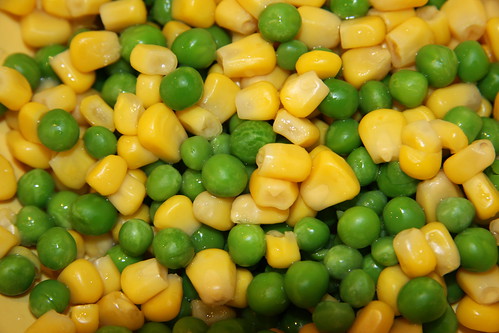
I toss those two together, as they can easily be picked up in large bags in the frozen section and kept around to be steamed and added to the plate, as they can be tossed into other preparations, like soups or stews. Don't buy canned peas, its not worth it, but if you make shepherd's pie, then you may want to have a can of creamed corn and add a few handfuls of kernels, as a a good binder between the meat and mash.

Spinach:
if there's a green guy you should always have hand, then spinach is your man.When fresh they could be turned into a salad, or stems removed, sauteed with a bit of olive oil and pinch of salt for some great side dish; frozen have the added advantage of being pre-stemmed, come in a variety of formats (whole, shredded loose, shredded and lumped into balls) and are ready to be added to a variety of preparations. Soups, pilaf, risotto, stews, pizza, pasta, the list is long and they certainly are delicious and healthy for you. Just don't believe the common notion that they are packed with iron, that stems from a century old misprint...

Bell peppers:
when in season, they are a great friend to have around; they can be used raw or cooked, served as crudites, sliced on pizza, sliced and sauteed, stuffed and stewed, roasted... they serve as a basis for both Cajun and Spanish cooking, and they are also common in Eastern European cuisine, so there is certainly some room to play with variety here.

Zucchini:
also known in more refined (and Frenchified) circles as courgette, this is a soft member of the squash family, having the distinct advantage of not requiring peeling. While you can certainly eat them raw as part of a salad, you would most likely enjoy them sauteed, in soups, in pasta sauce, roasted... you get the idea. Don't pick them too small or too big, the optimal size is pretty much a small cucumber.

Roots:
if you've done some stocking of your pantry, then you should definitely have some of those around; onions, carrots, potatoes, garlic, rutabagas, those can all come into play, especially when combined with some of their fridge friends. It can be pretty amazing what a simple trio of these guys can do when they gang up in your pot!

Fruits:
I'll be honest and admit that I dont use fruits a lot, especially in winter. These are generally the guys that you'll want in season, when they're not ridiculously expensive, and as local as possible, so that you get the stuff that got to ripen in the field instead of a transport truck from three countries away.

In the event that you should keep stuff around, then frozen is a good option. They are more likely to have been picked when ripe, and if you can swing it, look for those brands who are flash frozen (withing a couple of hours from harvesting.) Otherwise, lemons and lime can always come in handy, even if its just to give and extra kick to your bar.

Of those that are available most of the year, bananas are a good go-to, especially for the breakfast smoothies, or those of you that can handle some baking. Along with apples like Cortland, they make handy snacks. Try to stay away from such varieties like Macintosh, Red or Yellow Delicious and the like, as they don't have good shelf live and don't hand the qualities that you want if you want something that can be cooked as well as eaten as is.

Did I miss something? Feel free to comment and add your suggestions. Remember, its your plate, its your fridge, so eat it, don't waste it.

Monday, April 18, 2011

Kitchen basics: proteins part 2, the vegetarian option

As an omnivore, not using meat for a main meal is a little odd. After all, according to the food charts that the government puts out, it is part of the food groups that we should balance throughout our day. While it means rethinking what's been assumed is necessary for a square meal, it is quite possible, some would argue healthier, to not eat meat and still have a balanced diet.

I'm not going to go down the road of preaching this or that diet; what I am going to offer is meat substitutions that maintain the body's need for proteins and other elements that are packed in animal proteins. The one thing that has to be taken into account when going on a vegetarian diet is that you'll need to learn your essentials and get your substitutions right, or you'll run out of essential vitamins. So if that's your game, then sit down and do some studying. For the rest, taking a few meals a week as vegetarian as possible will be quite healthy and a nice change of pace. You do need a few lean days once in a while.

First off, the animal products:

-Fish and seafood:

I treat those under the same heading, because they pose the same problem: the best stuff is fresh, but that doesn't allow for good budgeting. There is also the issue of commercial fisheries and all that stuff, but again, this is more of an issue of conscience than of good budgeting. It is quite possible to include them in your diet without busting the bank, but you'll have to learn new techniques for dealing with them; one great advantage is that they are pretty fast cookers, so if you tend to live a hectic life, then these guys are your friends, besides the health benefits.

Only go for fresh seafood if its really a deal, except for mussels; a pack of fresh mussels costs about five dollars and can feed two to four people in one sitting. Seafood is fairly forgiving of the frozen state, so if you were to get some staples there, I'd recommend shrimps to begin with; its amazing what a handful of shrimps tossed unto a bowl of Ramen can do! Its a great way to add a different flavor on a whim, and always useful to have around for the vegetarians. You can also go with clams (shelled or not), calamari or scallops. If you have access to Asian shops its very likely that they'll have a nice variety of frozen seafood available at a reasonable price, in a variety of size.

Fish should be picked up as fresh as possible, but there are decent frozen options, depending on your tastes. White fish will tend to be pretty plain tasting, so a bit of flavoring will make a huge difference. Cod is one of the best white fish to pick up, but its not the cheapest and over harvesting is certainly an issue. Of the pink flesh types, the most common would be salmon, but its not for every one's tastes. I'm more of a trout man myself, but go with what makes you comfortable. There are several brands of commercially available frozen fish products that are portioned and individually packaged, which is a boon for the thrifty eater, but a bit of a bitch for those who are more environmentally concerned. You could buy it fresh and pack it is such a way as to save on plastic, but I'll leave that up to your judgement.

-Cheese:

cheese is sort of the neglected child in our pantries. People see the price per pound and consider it expensive, but then they'll gladly splurge on a couple of steaks. Do the math: how many meals can you dish out with a couple of t-bones? Now take the same cost and buy some cheese; how much variety do you get?

The problem is that too many of us were brought with very bad cheese, and so the relationship was skewered from the start. Avoid that terrible word "processed" and get some good multipurpose cheese, like cheddar, Emmental, Havarti, Gouda or Gruyere. If you like cheese that melt easily then get mozzarella, but spike it by grating it with another friend, its give the result a better flavor. On a later post, I'll come back to cheese on more details. In the meantime, pick something that you can cook with, and that you can eat as is. Never buy them horrid individually wrapped cheese slices and cheese spreads; its really not worth the money, seriously.

-Eggs:

you should definitely have some eggs in your fridge at all time. For many cultures in Europe, an easy snack involves a fried egg, and having a jar of good homemade pickled eggs in the fridge does wonders to feed the midnight (or midday) munchies. When you've learned how to use them properly, a dozen eggs can get you through several meals at a very low cost indeed.

-Yogurt:

the granddaddy of fermented dairy, yogurt has a few advantages that are worth noting: it is a digestive booster, helping the intestinal flora rebuilt itself (preventing... clogging.); it is an essential component in curries and tsaziki; it is a valid base for less oily salad dressing; it can be used sweet or savory, so its pretty flexible. With a handful of nuts and berries, its an instant breakfast. Toss the fruits in a blender with some yogurt, a spoonful of honey and some bran, and its smoothie galore.

Skipping animal derivate, what are the options?

-Beans and legumes:
there is a vast selection of hearty dishes that can be developed out of these guys from Italy, Spain, Greece, the south of France, the near and middle East, eastern Europe and the Indian subcontinent. That's a huge array of flavors and possibilities, so there's no reason not to keep a few cans of those little guys around. Lentils are a great choice, as out of all the legumes, they can be prepared from dry with no soaking required and are common in nearly all of those cuisines. And they sure are cheap!

-Nuts and peanuts:

while technically peanuts are legumes, we pretty much use them the say ways we use nuts, so we'll treat them together. They are packed with good fats, but should be used moderately; a portion of nuts is a pretty small handful in actuality. Unless you're really going to burn it off, stray on the side of less rather than too much and you'll stay clean of the extra padding.

Personally I find that peanuts are the most multi-use of the dried legumes, usable as butter, whole or crushed, as finger foods, preparation additives, spreads and as a delicious toppings for ice cream, pho, curries and salads. Crushed nuts can also be used in nearly the same way, but will end up costing you more. I always have a jar of peanut butter in the pantry, and keep a small bag of good roasted peanuts for quick snacks.

-Mushrooms:

again, we have to blame modern dietary habits for our perception of mushrooms. For one thing, we all tend to buy good old white button mushrooms, and that's well and fine, but they are fairly boring. The other thing is that until recently, those were the mushrooms available pretty much everywhere, so that was all you go, unless you got adventurous and splurged on some coffee caps, or for the sophisticated, portobellos.

But mushroom production, helped by a combo of Chinese buyers and celebrity chefs, have been growing more varieties, such as shitake, oister and porcini. Mushrooms can nearly serve as a meat replacement, as they are pretty nutritious and the variety provides a wide array of flavors and texture. If you have access to an Asian market, then you should look into getting some dried mushrooms, which keep a long time, only requiring soaking prior to use. If you have a good and reliable supplier, you could also get your hands on wild picked fungi, and delicious things like Horn of Plenty and Hen of the Wood could start turning up on your dinner plate.

My recommendation for mushrooms is to get some good old white button fresh, but keep an eye out for some dried shitake and others, which can not only supplement your fare, but when mixed up can really change your otherwise plain omelet. The other great thing about mushrooms is that they are a low-impact food source, requiring delicate conditions to grow, but little other resources like water and definitely no chemical fertilizer: it is entirely fed by manure.

-Grains and  plant-based products: on this one I'm going on a limb of sort, as its really not my area of expertise (blame bacon if you like), but there are several products of plant based protein sources that can really help you out if meat and animal products are out of the question.

Quinoa

 is a good source to investigate, as it bypasses two major allergenic concerns, soy and gluten intolerance. I am of the first order (in my case I simply do not process it effectively) and gluten concerns is a rising trend, so this could be an interesting source to investigate.

Soy

in the form of tofu, miso or tempeh are also sources of healthy proteins, but there you're on your own. I have never had good experiences with tofu, so its not one of my go-to recommendations for meat replacement, but I would encourage you to experiment with miso and tempeh, which are fermented (naturally, not industrially processed) soy paste products with great health benefits. In this I would recommend a bit of investigation with places like this site.

Overall, meat replacement is a question of choice, more than a budgetary reason. Some could argue that its healthier, some would say cheaper, but I'd say that its mostly a choice that requires an open mind and a certain amount of research to be certain that you don't end up with vitamin or mineral deficiencies.

In all, a good diet is a question not only of nutrition balance, but also of variety. This takes place both on the source of the building blocks of your meals, but in the healthy attitude of an open-mind and curiosity for new culinary approach, combined with a stomach that dares to try something new.

You could well be pleasantly surprised and discover a new comfort food. Even if its from the other side of the planet.